





Understanding DeFi in 2024, the guide

DeFi made its first breakthrough in 2018 via decentralized exchanges, or DEXs (Decentralized Exchange). The best known were Etherdelta or Idex. These platforms made it possible to buy and sell Ethereum blockchain tokens directly from a wallet like Metamask. No need to open an account or do a KYC, everyone could exchange their tokens without intermediaries.
However, the interfaces were basic and incomprehensible and DEXs did not replace centralized platforms like Coinbase or Binance. Trade volumes have never exceeded one billion dollars. Everything changed in 2020.
The DeFi crypto revolution
The term decentralized finance, or DeFi, includes several types of projects that all aim to build a financial ecosystem without intermediaries. To do this, it uses 3 tools: Internet, cryptography and blockchains. The main blockchains currently in use are Ethereum, Polkadot, Binance Smart Chain, or Cosmos. The blockchain bitcoin is not really concerned because it does not allow the execution of Smart Contract, a concept that we will discuss in this article.
The goal of decentralized finance is both ambitious and powerful: create a transparent and fair financial system. It makes it possible (theoretically) to get rid of banks, insurers and other players who are generally not very innovative (and expensive) in order to make finance more accessible. It is the opposite of traditional finance, which you go through when you want. invest in the stock market.
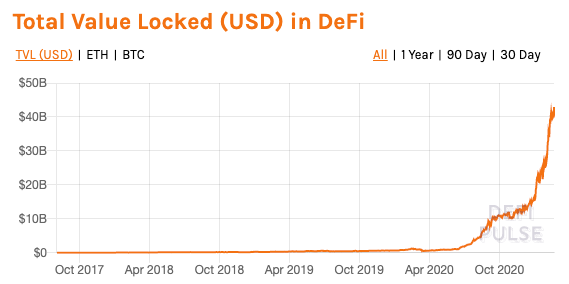
This promise is very popular with investors: in February 2021, almost $50 billion was deposited in various DeFi protocols. The daily volumes traded on the main exchanges (Curve or Uniswap) are also in the billions of dollars. DeFi is not a trend, it is here to stay.
DeFi protocols are based on the 5 main pillars of finance:
- Currency : issuance of currencies and accepted by all
- Credit : loans and loans of all kinds
- Trading : buying and selling assets and derivatives
- Insurance : coverage against risks of all kinds
- Infrastructure : the piping that allows the system to function
In today's financial system, each of these pillars is expensive and opaque. They are likely to be deeply disrupted by DeFi, we will explain to you how.
The best platform to track your cryptos
https://www.youtube.com/embed/P-SzFssdAnA?feature=oembed
Major innovations in DeFi crypto
In order to disintermediarize the entire financial system, revolutionary new concepts have emerged. They make it possible to create a new financial system without central authorities.
The smart contract
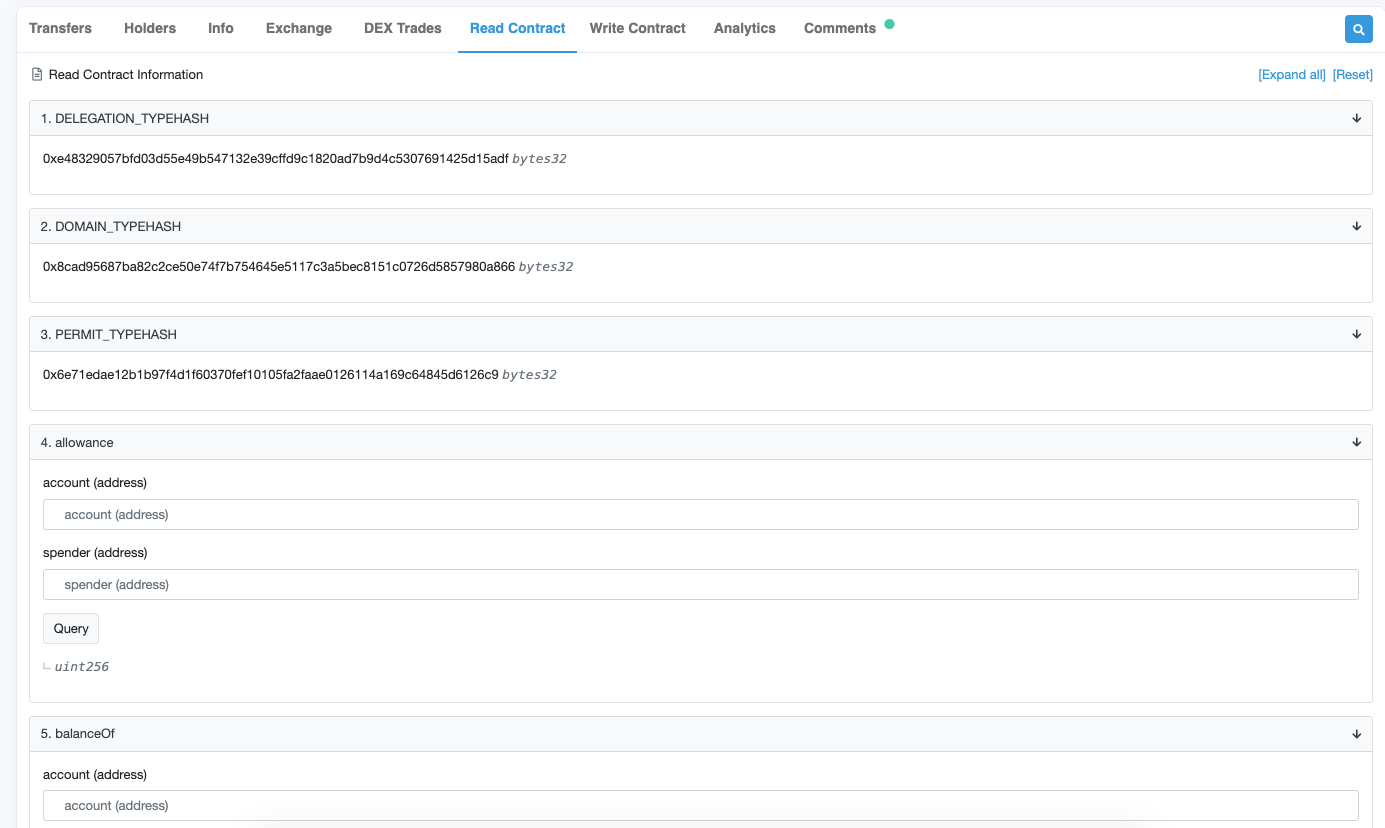
The Smart Contract, or smart contract, is an innovation that has existed since the launch of Ethereum. This contract is a piece of code recorded on a blockchain, and which allows two parties to agree on terms. All DeFi innovations are stored on smart contracts. The blockchain is responsible for storing and executing the contract thanks to an oracle like Chainlink.
Let's take an example: you buy DeFi delay insurance for a Paris - Lyon train ticket. If your train arrives more than 30 minutes late, you will be reimbursed. The contract is stored on the blockchain and an oracle will monitor the arrival time of the train. If he is more than 30 minutes late, the insurance payment will be made automatically.
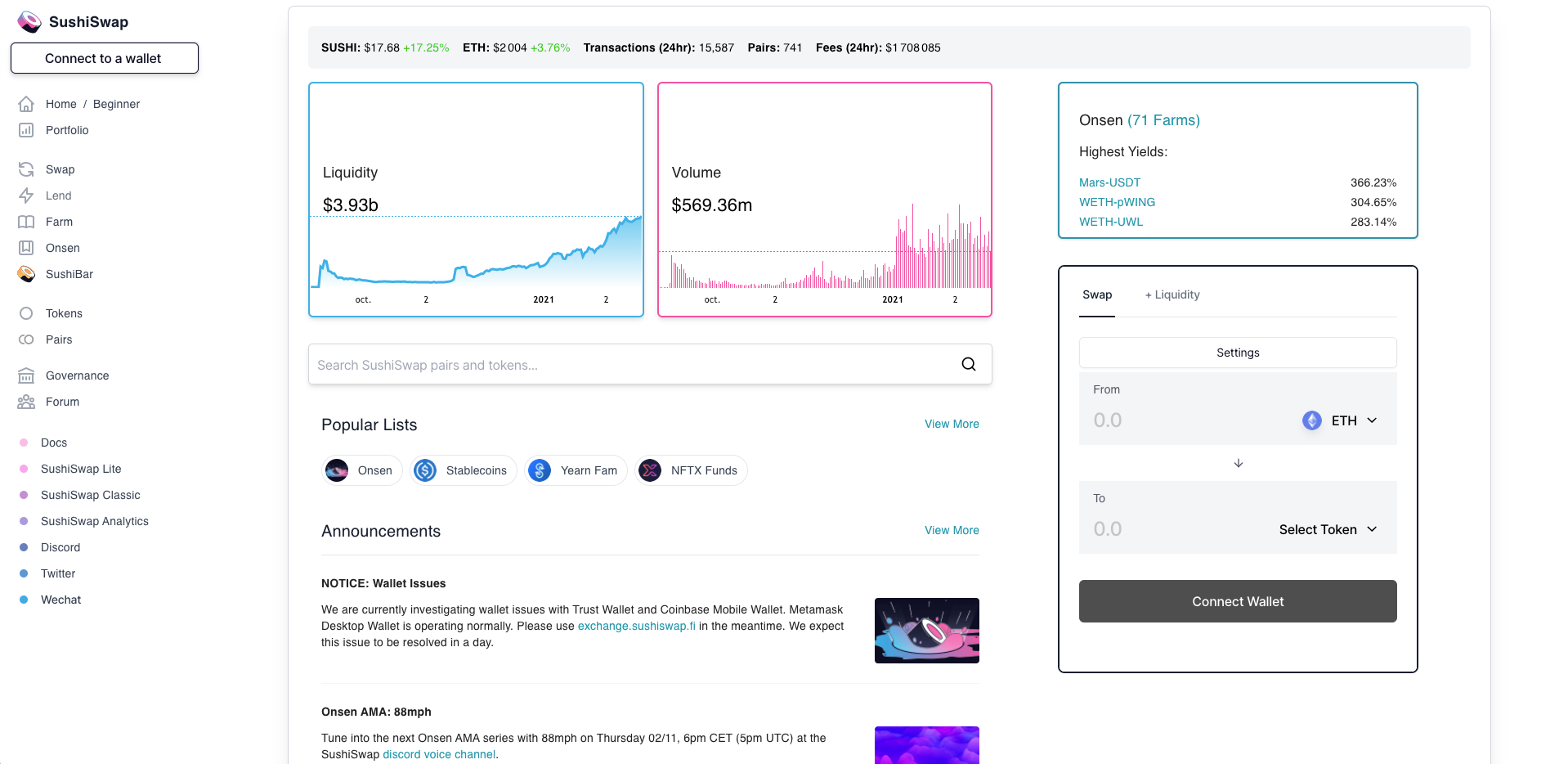
The advantage of smart contracts is that they are Open source. Anyone can read, audit, and test them to make sure they're solid. It also means that anyone can clone a project and launch it very quickly. That's what happened to Uniswap, which was copied by Sushiswap and Pancankeswap.
Governance tokens
In order to make decisions concerning the evolution of a blockchain protocol, governance tokens (or tokens) (Governance Token) are issued. These are freely exchangeable. Your ownership percentage determines your voting rights.
Here are the most important governance tokens:
- Uni, for the Uniswap DEX
- 1Inch, for the 1Inch DEX
- Sushi, for the Sushiswap DEX
AMM or Automated Market Makers
When you sell a ETF on a trading platform like DeGiro, a financial intermediary will buy it and take care of finding a buyer. It's called a Market Maker, or market maker in good French. It is an essential link in traditional finance. In DeFi, this intermediary does not exist! How to make it possible to trade without intermediaries? This is where AMMs come in. These smart contracts allow you to group (Pool) liquidity on token pairs (e.g.: ETH-USDC). We will discuss this concept of “pooling” and “liquidity providers” a little later.
Let's take an example: you want to buy ETH with your USDC (a stablecoin whose value is linked to the dollar). You connect to a decentralized exchange like Uniswap, connect your wallet and initiate the transaction (Swap). You are going to send USDC and receive ETH. In the background, AMM takes ETH in its Pool of ETH/USDC liquidity and put your USDC there. You did your Trade without intermediaries. Attention, without intermediaries does not mean without transaction fees. This takes us to the next innovation, yield farming.
Yield farming: passive income
In order to allow trading on pairs like ETH-USDC, investors come to deposit an equivalent number of ETH and USDC in a smart contract. They can withdraw them at any time. What is the point of providing liquidity on pairs like ETH-USDC?
In order to encourage and facilitate purchases and sales, DeFi exchanges offer yield farming. By depositing your cryptos into a liquidity pool, you will receive a portion of the transaction fees generated by the trades made on your pair, without doing anything. The costs are divided between the various participants in the pool according to their contribution. Yes, becoming a yield farmer allows you to generate passive income.

If you contributed 1% of the total liquidity of the pool, you will receive 1% of the fees generated. Some platforms like Autofarm (on the Binance Smart Chain) even allow you to take advantage of the power of compound interest by reinvesting your earnings automatically, thus increasing your capital.
Access to DeFi
This may seem obvious, but it is a major innovation: access to DeFi is global and immediate. It is enough to have internet to start interacting with the different protocols. In traditional finance, access to products is often limited and supervised.
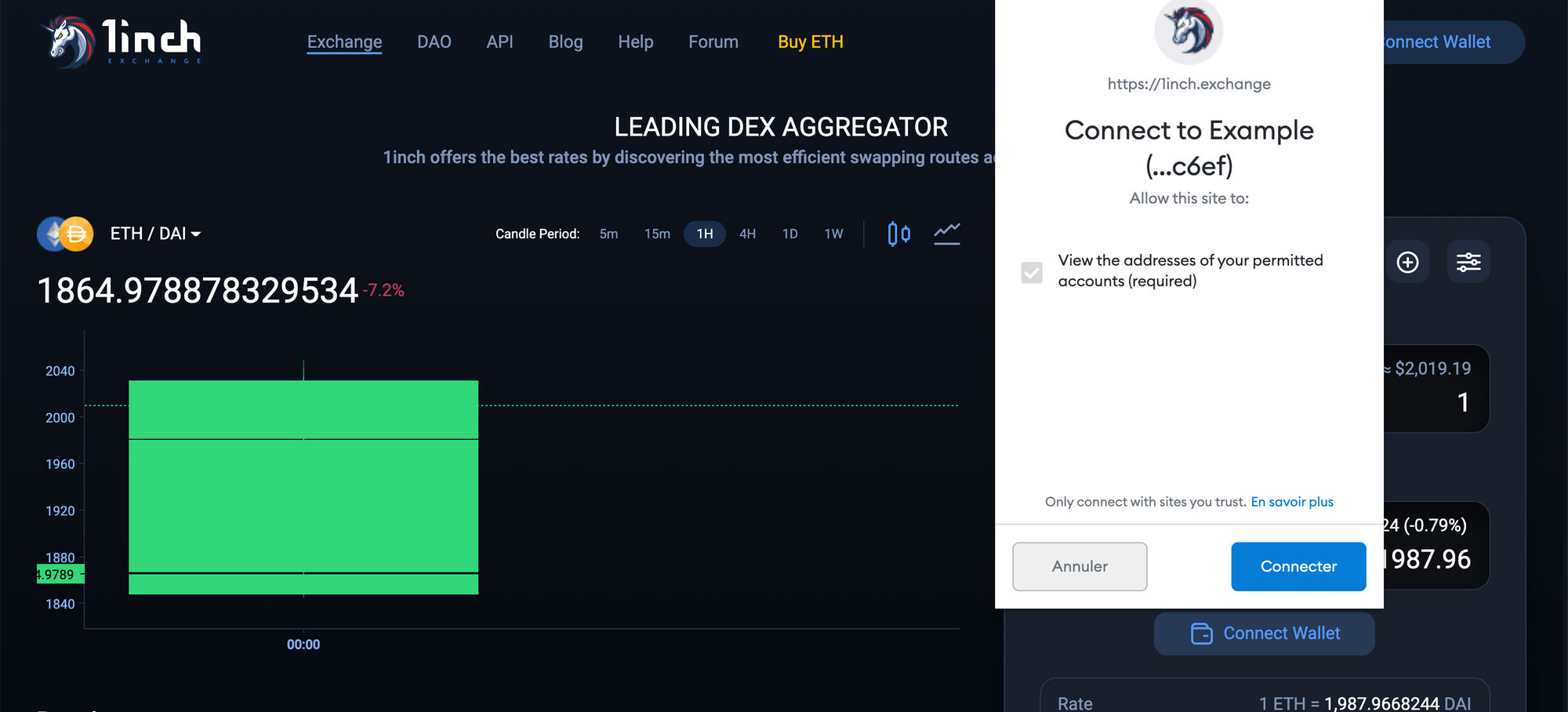
In order to use DeFi, you need a wallet, the equivalent of your bank account. The latter allows you to interact with Web3, the technology for interacting with the Ethereum blockchain. One of the best known and appreciated is Metamask. Very easy to use, it allows you to take advantage of all DeFi products safely. Indeed, you are The only one to control this wallet. The wallet is secured by a password. If you lose it, you can restore it with the seed phrase provided at creation. In case of loss of this”Seed phrase“, your funds will be lost. Be sure to keep it!
The best DeFi Crypto Projects
Remember the 5 pillars of traditional finance mentioned at the beginning of this article? Here are their equivalents in the crypto world.
- Currency: Stablecoin like USDC or DAI from Maker DAO
- Credit: Compound, Aave, Maker, Alpha Homora, Alpha Homora, dYdX, Venus
- Trading: Uniswap, Sushiswap, Curve, Pancakeswap, 1Inch, Balancer, Synthetix, Yearn.finance
- Insurance: Nexus Mutual
- Infrastructure: Solana, Matic, Binance Smart Chain, Binance Smart Chain, Terra, TheGraph, Chainlink
Investing in DeFi can be a great way to diversify your wealth management. To help you see things more clearly, Finary reviews the most promising projects.
Uniswap: the king of Ethereum DeFi
The first decentralized exchange worthy of the name, Uniswap allows you to exchange (of Swap) all ERC20 cryptos (Ethereum compatible) between them. It has its own governance token (UNI) and is growing very quickly. The exchange currently generates over $4B in transactions per day, more than Coinbase.
Bringing liquidity to Uniswap
Here is how you will be able to be paid for providing liquidity on Uniswap. It's not trivial, but nothing to be discouraged about!
- Install the Metamask plugin on your browser.
- Create an account and deposit Ethereum
- Go to Uniswap
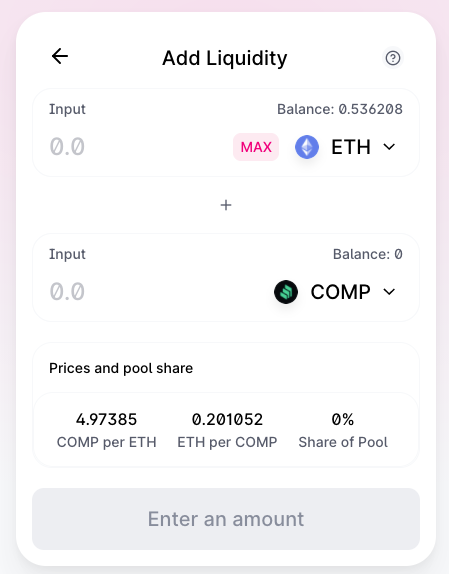
- Deposit a crypto pair, for example Ethereum/Compound (as shown in the image above). Since Uniswap is a decentralized AMM (automated market maker), there is no quid pro quo. So liquidity should always be provided in pairs.
- Validate transactions in Metamask.
- You will be paid according to the following formula: (0.3% of the trading volume on your pair) x (your% in the pair's liquidity pool, for example ETH/COMP).
You can withdraw your cryptos at any time. Pretty simple isn't it? The problem is that you already have to own a pair to be able to deposit them, and you have no idea which pair is the most profitable at the moment. This is where DeFi gets magic. There are protocols that take care of optimizing pooling and seeking the best profitability. You don't have to do anything. Be careful not to forget the cryptocurrency taxation for these operations!
Yearn finance: the crypto defi hedge fund
One of the protocols that optimizes pooling is yearn finance. It brings together the best services in the market to offer the most attractive rates. Yearn finance's token is YFI. Here are its 3 main features:
- Earn : lending cryptocurrencies in exchange for a fee at the best interest rate. Yearn connects to platforms like Compound or Aave.
- Zap : investments in a single transaction. The majority of platforms require up to 5 swaps to deposit your funds into a yield farming pool.
- APY : estimate of the return on a loan on Yearn. Vaults is their most complex product, it allows you to follow automated investment strategies. This kind of complex arbitration strategies, which until now were reserved for experts, are now available to everyone!
Use yearn finance
To help you use yearn, we've prepared a tutorial for you.
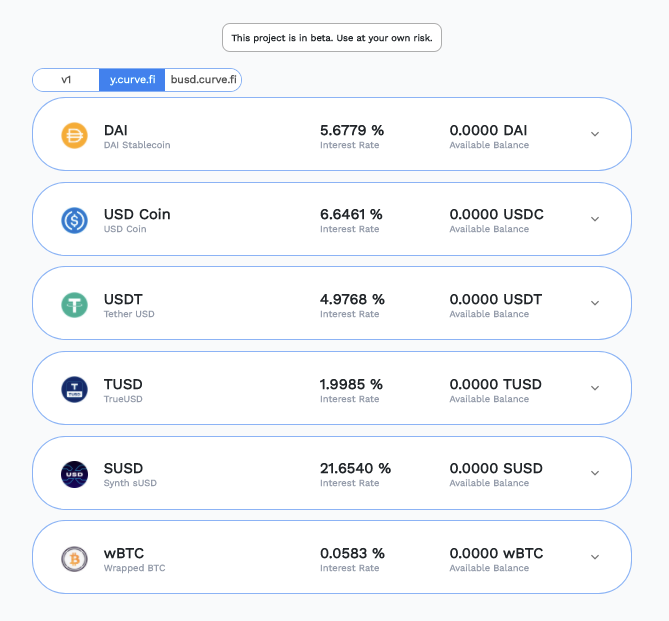
- Deposit Ethereum on yearn via Metamask. Unlike Uniswap, there is no need to deposit a pair of tokens.
- Your ETH is transformed into YFI (the yearn protocol token)
- The yearn protocol lends your tokens on various protocols such as Compound or Aave while optimizing performance.
- Your return is paid in YFI. You can sell them on Uniswap or Binance.
- You can withdraw your cryptos at any time.
Binance Smart Chain (BSC): The Binance Revolution
BSC is a newcomer to DeFi. It starts from a simple observation: the price of transactions has exploded on Ethereum. Indeed, the ETH blockchain is overwhelmed by the multitude of DeFi projects, which makes the network slow and expensive. A simple trade now costs nearly $20 in gas (a fraction of ETH). ETH 2.0 will solve this problem, but its arrival is not expected before 2022.
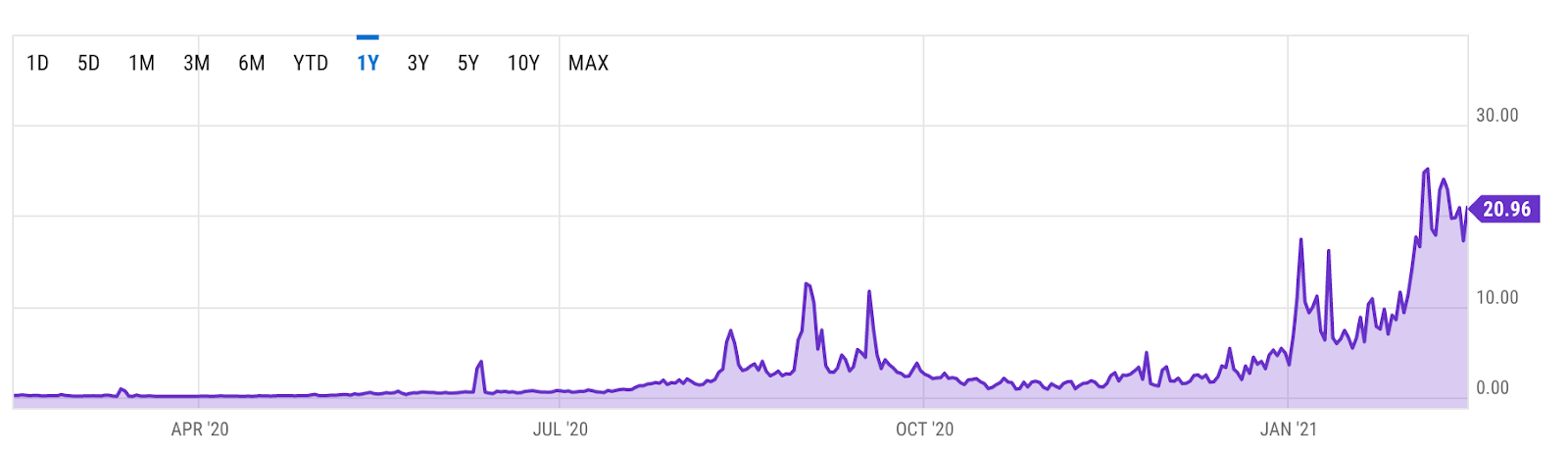
Based on this observation, the Binance team launched its own blockchain dedicated to DeFi, the Binance Smart Chain, or BSC. It allows transactions to be carried out almost instantaneously for a very low price. For comparison, a trade on BSC currently costs around $0.10.
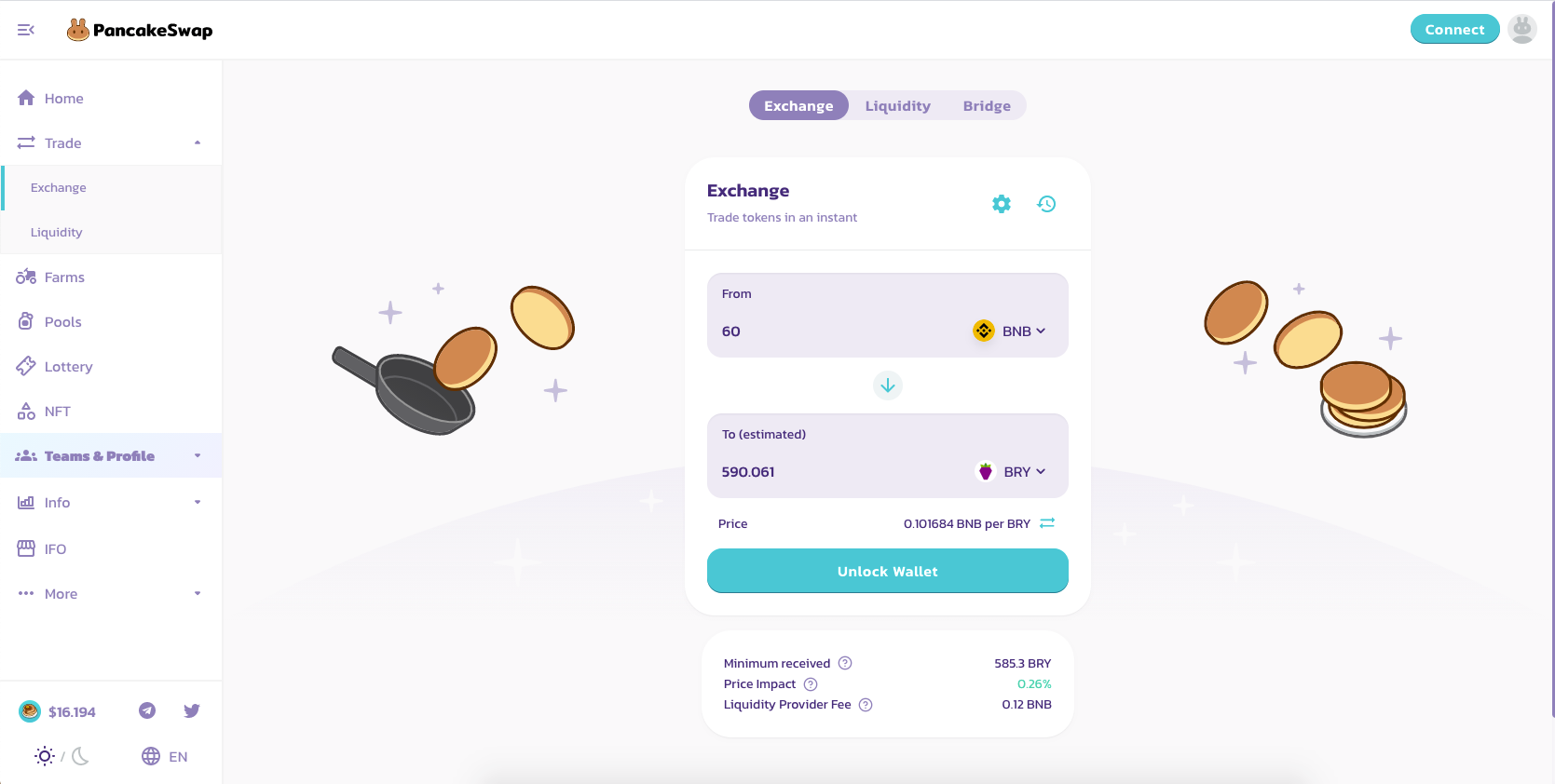
The token used on the Binance Smart Chain is BNB, the Binance token. The latter makes it possible to interact with all the protocols. The developers behind the project duplicated the majority of the tools that make ETH successful: addresses in 0x format, Metamask compatibility, a powerful explorer (BSCscan) in order to accelerate adoption. You can also find the famous yield farming on PancakeSwap (via Autofarm or Venus).
And it works! The volume on the main exchange BSC, Pancakeswap, exploded in a few weeks and now reached over $1.5B.
It should be understood that unlike Ethereum, the Binance Smart Chain blockchain is centralized. In fact, transactions are validated by 21 validators (Node) elected by the owners of BNB (the Binance currency). However, the main holder of BNB is... Binance. The exchange therefore controls the blockchain.
Compound: the other DeFi broker
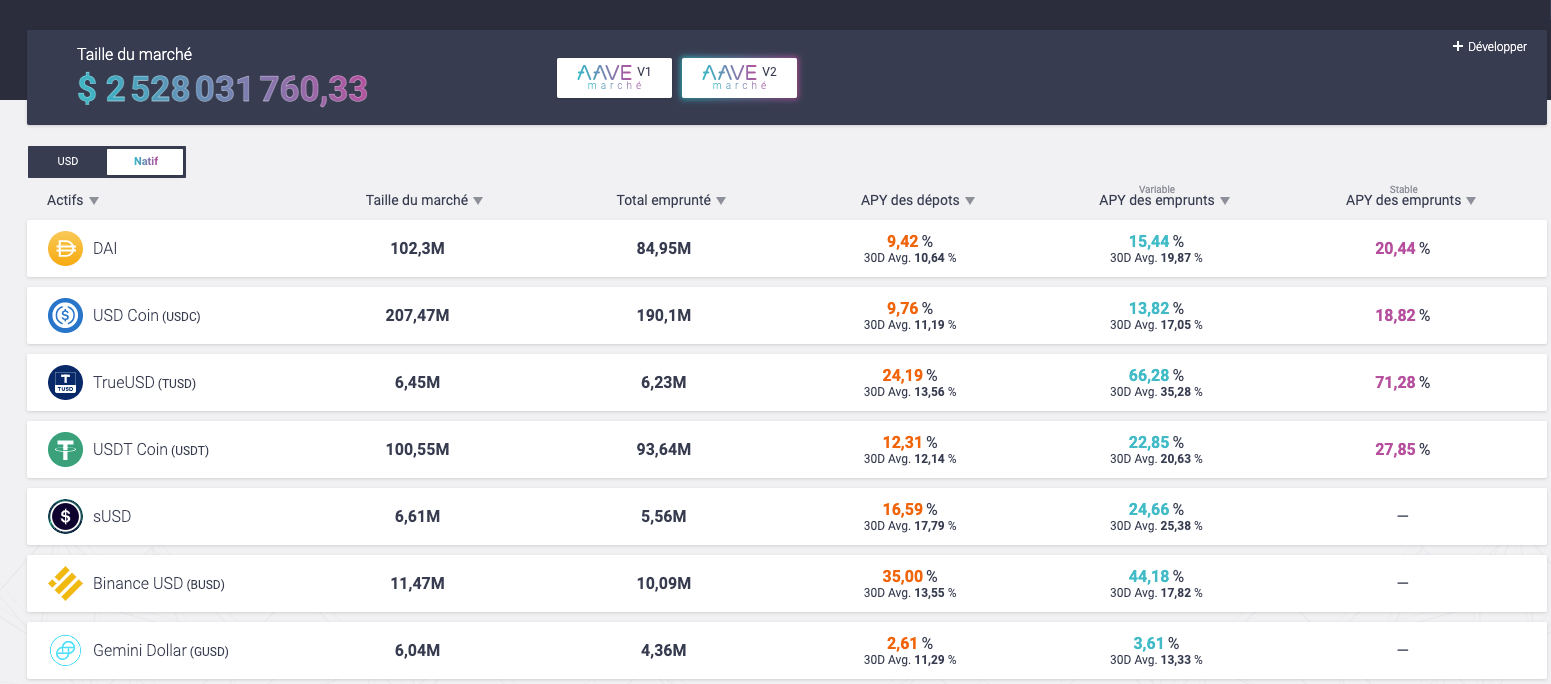
Compound is a credit platform that allows anyone to borrow or lend cryptocurrencies and receive remuneration in exchange. You can deposit DAI, Tether or even USD Coin there.
Aave: the crypto bank
What is Aave? Like its sidekick Compound, the Aave protocol is a credit platform. It also allows you to make “flash loans”, i.e. express loans that are repayable in less than 13 seconds (the time it takes to validate a block on Ethereum). They are used in automated trading applications like yearn finance.
The profitability of Defi crypto in all this?
Let's say that pooling is profitable, very profitable. Currently, the ETH pool on yearn pays 36% per year. We've seen pools go up to 5,000%... When you know that a bank pays 0.5% per year for your passbook A, the benefits of DeFi become obvious. There are fortunes to be won.
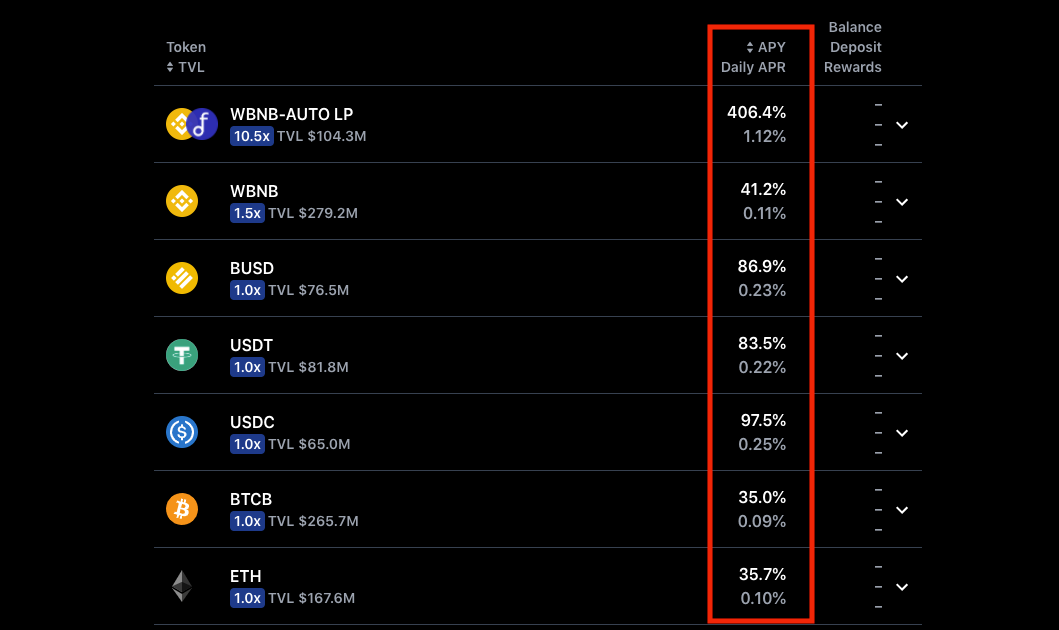
The protocols are fighting to attract more and more investors and this competition makes it possible to generate gigantic returns. This explains why investors are depositing huge amounts into the Aave or Sushiswap protocol.
The risks of DeFi crypto
High profitability means high risks. When you deposit cryptos into a smart contract, you are taking the risk of it being hacked. Since the projects are still very recent, this risk is very important. Especially since the amounts at stake are gigantic: there are currently more than $50 B$ deposited in DeFi pools.
The Rugpull: when developers leave with the cash register
This term literally means “pulling the rug” and it always works the same. The developers of a DeFi yield farming protocol are launching their project with huge returns. Investors are starting to deposit funds and the protocol is growing.
The trap is set and will close. Indeed, the developers have introduced a function”Call” allowing them to withdraw all the funds in one transaction. When developers are happy with the amounts deposited, they initiate the function Call and empty the pool. Everyone is losing their funds. In order to avoid this risk, it is better to invest in established protocols such as Uniswap or Aave.
Good to know: If you deposit your funds into a DeFi crypto project, you no longer have control over them. You have to withdraw them to a wallet to get your hands on them again.
Impermanent loss
There are also risks inherent in yield farming, including impermanent loss. This fairly complex concept can be summed up as follows: the price balance between the 2 assets in a pair can be upset in the event of large variations. Thus, an investor could leave with less money than by simply making HODL. One way to avoid this is by depositing your coins into a stablecoin pool, but the returns are logically lower. The return always pays for the risk!
In addition, there are a lot of scams and bogus projects that just copy (Fork) another project to try to extract money from unsophisticated speculators. Since everything is open source and therefore freely accessible, it is very easy.
DeFi crypto in a nutshell
Above all, DeFi is an incredible technological advance: you can borrow money instantly, without supporting documents or any other documents. Your Metamask wallet is enough. Finance in the broadest sense will be shaken up by this revolution. There is now even a protocol for lending Bitcoin on the Ethereum blockchain. Will we see Bitcoin DeFi emerge? It is very possible!
To miss out on DeFi is to miss out on a major innovation. However, the ecosystem is still young and the risks are very high. Be careful!
How to invest in DeFi Crypto? There are a lot of options for investing in Crypto DeFi, it all depends on whether you already have Ethereum or not. If not, you will first have to exchange your euros for ETH on a platform like Coinbase, Bitpanda or Binance. If you already have ETH, you can buy defi crypto on a decentralized platform (DEX) like Uniswap or Sushiwap or via a Wallet like Metamask or Ledger.
How does Crypto Defi work? Crypto DeFi is decentralized finance. It allows you to get rid of banks and lend or borrow money (in crypto) directly. The rates of return (10% on average) are much higher than those that a Livret A can offer, but there are obviously risks that must be understood before investing.
What Crypto Defi is increasing in value? Tokens like Uni, Sushi or Aave have all grown enormously in value since 2020. They have taken advantage of the explosion in volumes placed on Crypto Defi, and there is a good chance that this will continue as the industry grows.
In which crypto defi should you invest in in 2024? Uni is a safe bet for investment. There are also excellent projects like Sushiswap or Elrond Gold that have great potential and whose value could well increase in the coming years.


