

Investing in Bitcoin
Updated on 13 July 2026
Investing in Bitcoin in 2026 means buying and holding the world's most valuable cryptocurrency, with a market cap of around $1.26 trillion. Its supply is capped at 21 million units, and its price remains highly volatile: after a record of $126,198 in October 2025, it trades around $62,000 in mid-2026.

- Bitcoin reached an all-time high of $126,198 in October 2025, before falling back to around $62,000 in mid-2026.
- About 20 million BTC have already been mined out of the 21 million planned; the next halving is expected in April 2028.
- US spot Bitcoin ETFs (BlackRock IBIT, Fidelity FBTC) already manage more than $59 billion in combined assets under management.
- Capital gains on Bitcoin disposals are taxed at the flat tax (PFU) rate of 31.4% in France since 1 January 2026.
What Is Bitcoin?
Bitcoin is a decentralised cryptocurrency created in 2009, with its supply capped at 21 million units, making it a programmatically scarce asset often compared to digital gold.
Unlike traditional currencies, Bitcoin is not issued by any central bank or state. It runs on a public, decentralised ledger, the blockchain, on which every transaction is validated by a worldwide network of miners. This architecture makes it transparent, difficult to counterfeit, and independent of national monetary policies.
The total number of Bitcoin that can ever exist is fixed at 21 million units. This scarcity is hard-coded into the protocol itself and cannot be changed without a near-unanimous consensus of the network, which sets Bitcoin apart from fiat currencies, whose supply central banks can adjust.
How Much Is a Bitcoin Worth in 2026?
Bitcoin trades around $62,000 in mid-July 2026, for a total market cap of about $1.26 trillion, the highest of any cryptocurrency.
This price remains well below the all-time high of $126,198 reached on 6 October 2025, as the cryptocurrency market has been going through a severe correction since the start of 2026. This volatility is structural: Bitcoin can swing by several dozen percent within a few weeks, both up and down.
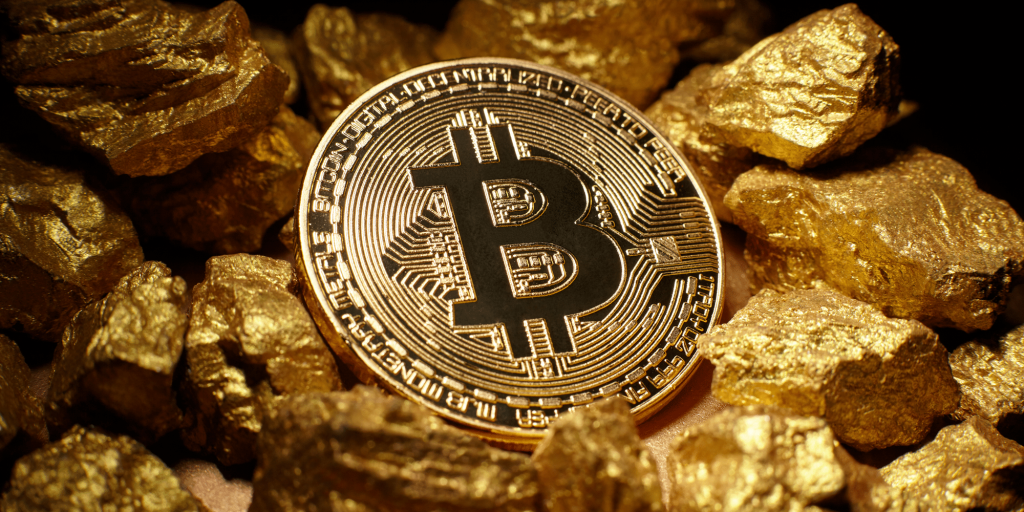
There is no guarantee about how its price will evolve in future: past performance, including all-time highs, is not a reliable indicator of future performance.
Why Invest in Bitcoin?
Bitcoin attracts investors for its programmed scarcity, its growing institutional adoption, and its independence from central banks, but these strengths do not offset its risk of capital loss.
The halving mechanism cuts the reward paid to miners in half roughly every four years: the last reduction, in April 2024, brought that reward down from 6.25 to 3.125 BTC per block. The next one is expected in April 2028. About 20 million BTC have already been mined out of the 21 million planned, and the last Bitcoin is not expected to be mined until around the year 2140.
Institutional adoption has grown markedly since the launch of spot Bitcoin ETFs in the United States. According to CoinDesk, BlackRock's IBIT ETF held about $47.95 billion in assets under management at the end of June 2026, followed by Fidelity's FBTC with around $11.3 billion. Companies such as Strategy (formerly MicroStrategy) also hold substantial Bitcoin reserves on their balance sheet (843,775 BTC as of early July 2026), and several states have built up strategic Bitcoin reserves, including the United States (around 328,372 BTC) and El Salvador (7,508 BTC).
How to Buy Bitcoin in France?
To buy Bitcoin in France in 2026, you need to go through a platform authorised as a Crypto-Asset Service Provider (CASP, "PSCA" in French) under the European MiCA regime.
Since the end of the transitional period for the earlier French registration for digital-asset service providers on 1 July 2026, only platforms holding a CASP MiCA authorisation may legally serve French residents. Binance, having failed to obtain its authorisation in time, can no longer accept new clients or new deposits from French users since that date. Platforms such as Kraken, Coinbase, Finary and Trade Republic, by contrast, hold a valid CASP authorisation. Find a detailed comparison of fees and regulatory statuses in our best crypto platforms guide.
Opening an account always requires an identity check (KYC), in line with anti-money-laundering obligations.
finally regulated
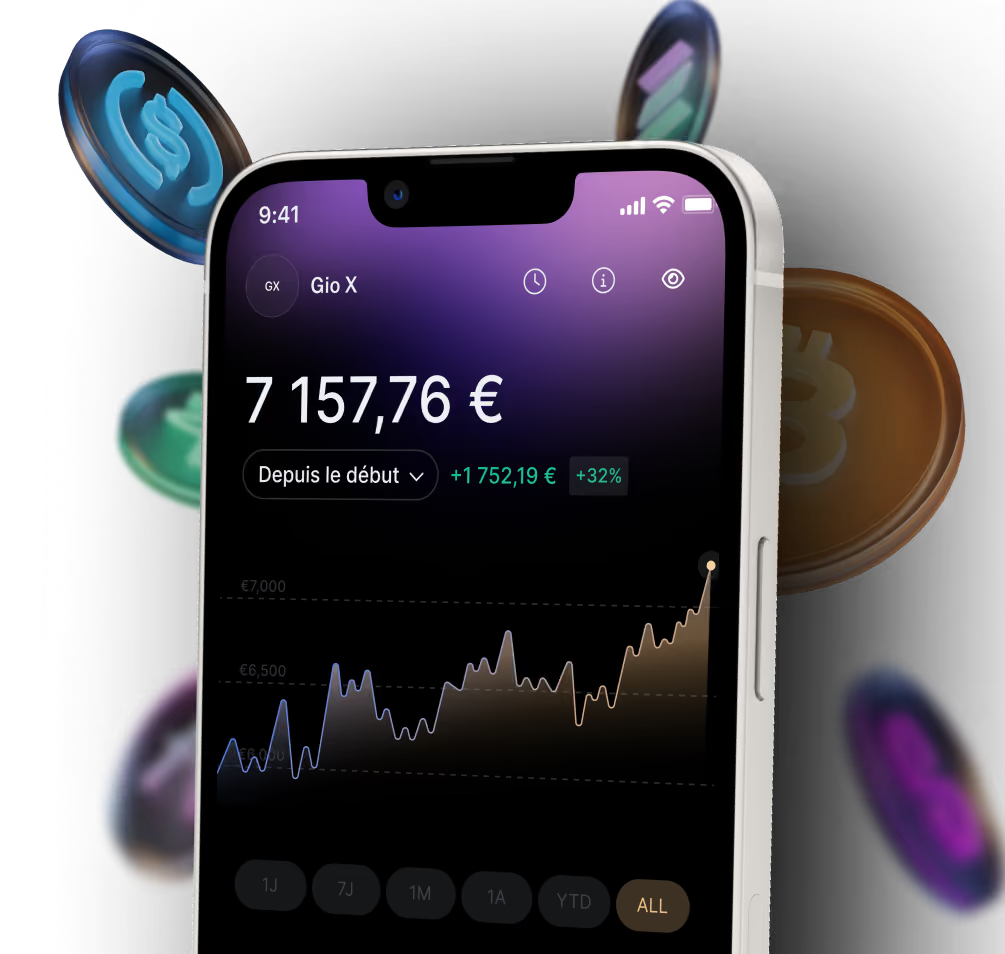
Investing involves risk, including the risk of capital loss. Crypto-assets are highly volatile: you could lose some or all of your investment. Past performance is not indicative of future performance. Finary is authorised as a Crypto-Asset Service Provider (CASP, "PSCA" in French) by the AMF under the MiCA regime.
How to Secure Your Bitcoin?
Securing your Bitcoin means choosing between keeping it on an exchange platform, simpler but exposed to hacking risk, and a personal wallet, safer but more demanding to use.
Leaving your Bitcoin on an exchange platform remains the simplest option, but it carries a security risk: many exchanges have already suffered major hacks in the past. For long-term storage, a personal wallet lets you hold your Bitcoin's private key directly.
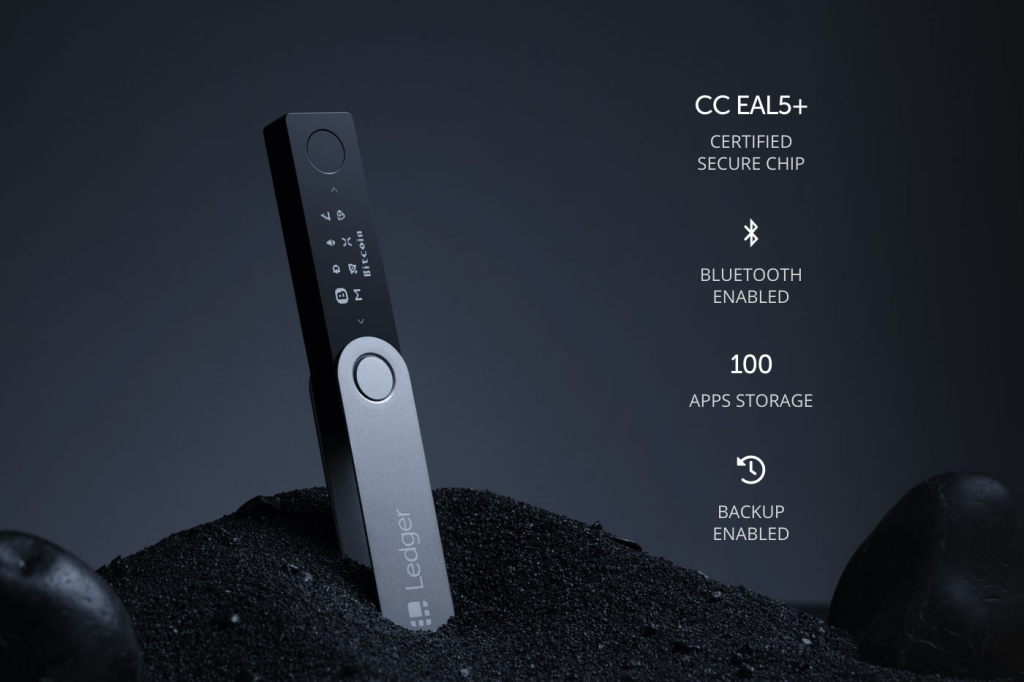
Hardware wallets, such as those offered by Ledger or Trezor, which share most of the market in 2026, store the private key offline to limit the risk of remote hacking. This level of security does not, however, protect against every threat: in January 2026, a user fell victim to a social-engineering attack that led to the theft of 1,459 BTC, with no fault in the hardware itself. User vigilance remains a decisive security factor.
What Are the Risks of Investing in Bitcoin?
Investing in Bitcoin carries a risk of partial or total capital loss, due to its high volatility, the absence of any capital or deposit guarantee, and security risks specific to digital assets.
What Is the Tax Treatment of Bitcoin in France?
Capital gains realised by an individual when converting Bitcoin into euros are subject to the flat tax (PFU) of 31.4% since 1 January 2026.
This rate breaks down into 12.8% income tax and 18.6% social contributions. A €305 allowance applies to total annual disposals. Investors may elect to be taxed under the progressive income-tax scale instead, if that proves more favourable. Official reference: impots.gouv.fr.
What Strategy for Investing in Bitcoin?
DCA (Dollar-Cost Averaging), which means investing a fixed amount at regular intervals rather than all at once, is a strategy commonly used to smooth out Bitcoin's high volatility.
This approach reduces the risk of investing all of one's capital at an unfavourable moment, without removing the asset's inherent risk of loss. To learn more about this method, see our dedicated guide to crypto DCA.
Before any allocation, it is advisable to assess your investment horizon and risk tolerance, and never to commit an amount you would not be prepared to lose entirely.
Frequently Asked Questions
Is It Too Late to Invest in Bitcoin in 2026?
It is hard to answer with a simple yes or no: Bitcoin is still trading at roughly half its October 2025 record, which can be read either as an opportunity or as a signal for caution, depending on each investor's horizon and risk tolerance.
How Long Does It Take to Mine All the Bitcoin?
At the current issuance rate, the last Bitcoin will be mined around the year 2140, because of the halving, which cuts miners' rewards in half roughly every four years.
Can You Invest in Bitcoin Without Risk?
No. Investing in Bitcoin carries a risk of partial or total capital loss, due to its high volatility, the absence of a capital guarantee, and security risks (hacking, loss of private keys).
What Tax Applies to Bitcoin Capital Gains?
Capital gains realised by an individual when converting Bitcoin into euros are subject to the flat tax (PFU) of 31.4%, made up of 12.8% income tax and 18.6% social contributions, since 1 January 2026.
Should You Store Your Bitcoin on a Platform or a Personal Wallet?
Keeping your Bitcoin on a platform is simpler but exposes you to the risk of the exchange being hacked. A personal wallet, especially a hardware wallet such as a Ledger or a Trezor, offers better security for long-term storage.
Is Bitcoin a Store of Value Like Gold?
Bitcoin shares with gold a limited supply and a role as a store of value, but it remains far more volatile: its market cap is still much smaller than that of the global gold market, estimated at several trillion dollars.
Sources
CoinMarketCap, Bitcoin (BTC) price and market cap
CoinDesk, Bitcoin circulating supply (January 2026)
Bitcoin Foundation, halving schedule
CoinDesk, spot Bitcoin ETF assets under management (June 2026)
Yahoo Finance, Strategy's Bitcoin reserves (July 2026)
CoinDesk, social-engineering theft targeting a hardware wallet user (January 2026)
Ledger Academy, hardware wallet comparison (2026)
impots.gouv.fr, taxation of capital gains on digital-asset disposals
AMF, end of the transitional period for digital-asset service providers (1 July 2026)
Regulatory disclaimers: Marketing communication. Investing carries a risk of partial or total capital loss. Past performance is not a reliable indicator of future performance. This article is provided for information and educational purposes only; it does not constitute personalised investment advice, a buy or sell recommendation, or tax advice. Crypto-assets are highly volatile and carry a risk of total capital loss. They benefit from no capital guarantee and are not covered by deposit guarantee or investor compensation schemes. Before investing, read the Key Information Document (KID) and, where relevant, consult an authorised adviser. Finary SAS, an investment firm authorised by the ACPR (no. 19283), member of AMAFI. Insurance broker registered with ORIAS (no. 21001279), member of the CNCGP (association approved by the AMF). Crypto-Asset Service Provider (CASP) authorised by the AMF under the MiCA regime, references no. A2026-026 and no. N2026-008.