Best Climate ETFs: A Responsible Investing Guide

Updated on 28 July 2026
A climate ETF is an index fund that invests in companies selected to reduce the portfolio's carbon footprint, often through the PAB or CTB methodologies aligned with the Paris Agreement. This guide compares the best climate ETFs, PEA-eligible (a French tax-advantaged equity savings account) or not, and sets out the criteria for choosing one to match your profile.

- A climate ETF applies a specific methodology (PAB, CTB or low carbon) that determines whether fossil fuels are excluded and how fast the portfolio decarbonises.
- PAB ETFs require at least a 50% cut in carbon intensity and a 7% annual reduction, against 30% for CTB ETFs.
- Thematic "clean energy" ETFs such as INRG are far more volatile than a diversified climate ETF tracking the MSCI World.
- The TER varies widely: around 0.15% for a eurozone PAB ETF, up to 0.65% for a thematic clean energy fund.
- Only ETFs holding European equities are PEA-eligible; global and clean energy ETFs are not.
What is a climate ETF?
A climate ETF is a basket of shares chosen for their low carbon footprint or their role in the energy transition, following a defined index methodology.
The best climate ETFs are not only financial instruments. They channel billions of dollars towards the companies redefining our energy and industrial systems.
How does a climate ETF work?
A climate ETF is a basket of shares selected for their positive environmental impact rather than for returns alone. These ETFs combine financial performance with a positive environmental impact, giving investors a simple and efficient option.
Each climate ETF follows a specific methodology. Some target decarbonisation leaders, others exclude the heaviest polluters, and some focus on renewable energy pioneers.
Why invest in the best climate ETFs?
Investing in climate ETFs is one possible approach among others. Climate risks, whether regulatory, physical or reputational, are reshaping which companies succeed on the stock market. Companies that move early on decarbonisation do more than tick a corporate responsibility box; they attract capital and talent, and avoid penalties.
Investing in climate ETFs can be one way to manage wealth while taking certain market trends into account. It also lets you reconcile personal convictions with financial goals.
The different strategies of climate ETFs
Climate ETFs take a range of approaches:
- Some strictly track indices aligned with the Paris Agreement (PAB), with a significant cut in carbon footprint and the exclusion of fossil fuels.
- Others use CTB (Climate Transition Benchmark) indices, favouring a gradual transition without fully excluding sectors that are still changing.
- Low carbon ETFs favour companies with low emissions.
- Thematic funds focus on renewable energy, energy efficiency or clean mobility.
This variety of strategies reflects the different views on the ecological transition. Each ETF makes a strategic choice that influences not only financial markets but also environmental and social policy.
Goals
How do you choose a climate ETF?
Choosing a climate ETF is like picking the ingredients for a dish that has to be tasty, healthy and sustainable. Every green option carries nuances, trade-offs and sometimes traps. Seasoned investors are not won over by marketing alone. They look closely at the detail.
The first question to ask is: "what is really under the bonnet?". Climate ETFs use widely differing index methodologies. Some funds simply exclude coal, while others require an annual cut in carbon emissions.
The gap between a "low carbon" ETF and a "Paris-Aligned Benchmark" (PAB) ETF is significant.
A demanding investor will therefore look at several aspects:
- The portfolio's carbon intensity: how much CO₂ is emitted per million euros of revenue. A low figure points to a sustainability focus.
- The share of "green" companies: check the percentage of revenue coming from sustainable activities, bearing in mind that the definition of "green" can vary.
- Alignment with the Paris Agreement: PAB and CTB indices require an immediate cut in carbon footprint and an annual downward trajectory.
- The exclusion of fossil fuels: some ETFs exclude any company involved in coal, oil or gas, while others exclude only the heaviest polluters.
Financial criteria matter just as much:
- Ongoing charges (TER): costs can vary significantly, and a competitive TER sits between 0.15% and 0.30%.
- Assets under management: a robust fund often exceeds €300 million, which avoids the risk of closure or liquidity problems.
- Tracking error: a high tracking error can signal difficulty in following the benchmark index.
- Replication method: you have to choose between physical replication, which offers more transparency, and synthetic replication, which can introduce counterparty risk but allows global diversification.
One often underestimated aspect is the portfolio's actual composition. Some "climate" ETFs can be dominated by tech or financial giants, which creates unexpected sector concentration. Others, focused on renewable energy, can be highly volatile.
Renewable energy ETFs are often very volatile. That volatility comes from several factors:
- Their exposure to small caps.
- Weather fluctuations, which affect energy output.
- Their strong sensitivity to interest rate rises.
Equally vital is transparency. The best issuers publish detailed reports on their methodology, holdings and ESG scores. Others limit themselves to vague promises. A diligent investor will read the technical documentation and compare the indices.
Still torn between active and passive management for your climate ETFs? If the subject looks complex, or you do not have time to compare, our detailed article "Active or passive ETF management: which is better?" sets out the features of both approaches, for information only.
| ETF | ISIN | TER | Region | PEA |
|---|---|---|---|---|
| Amundi MSCI EMU Climate PAB (PABM) | LU2182388582 | 0.15% | Eurozone | Yes |
| Amundi CAC 40 ESG (C40) | LU1681046931 | 0.25% | France | Yes |
| iShares Global Clean Energy Transition (INRG) | IE00B1XNHC34 | 0.65% | Global | No |
| Amundi MSCI World Climate Paris Aligned (PABW) | IE000CL68Z69 | 0.20% | Global | No |
Best PEA-eligible climate ETFs
Amundi MSCI EMU Climate Net Zero Ambition PAB UCITS ETF Acc (PABM)

This ETF may suit investors committed to fighting climate change. It tracks an index aligned with the Paris Agreement, targets a 7% annual cut in carbon emissions and excludes heavily polluting companies. It focuses exclusively on the eurozone. The fund's ISIN is LU2182388582; its full profile is available on JustETF.
With a TER of just 0.15%, this ETF is a low-cost option. It holds European companies leading the energy transition, such as Schneider Electric and Iberdrola. Physical replication gives visibility on the assets held.
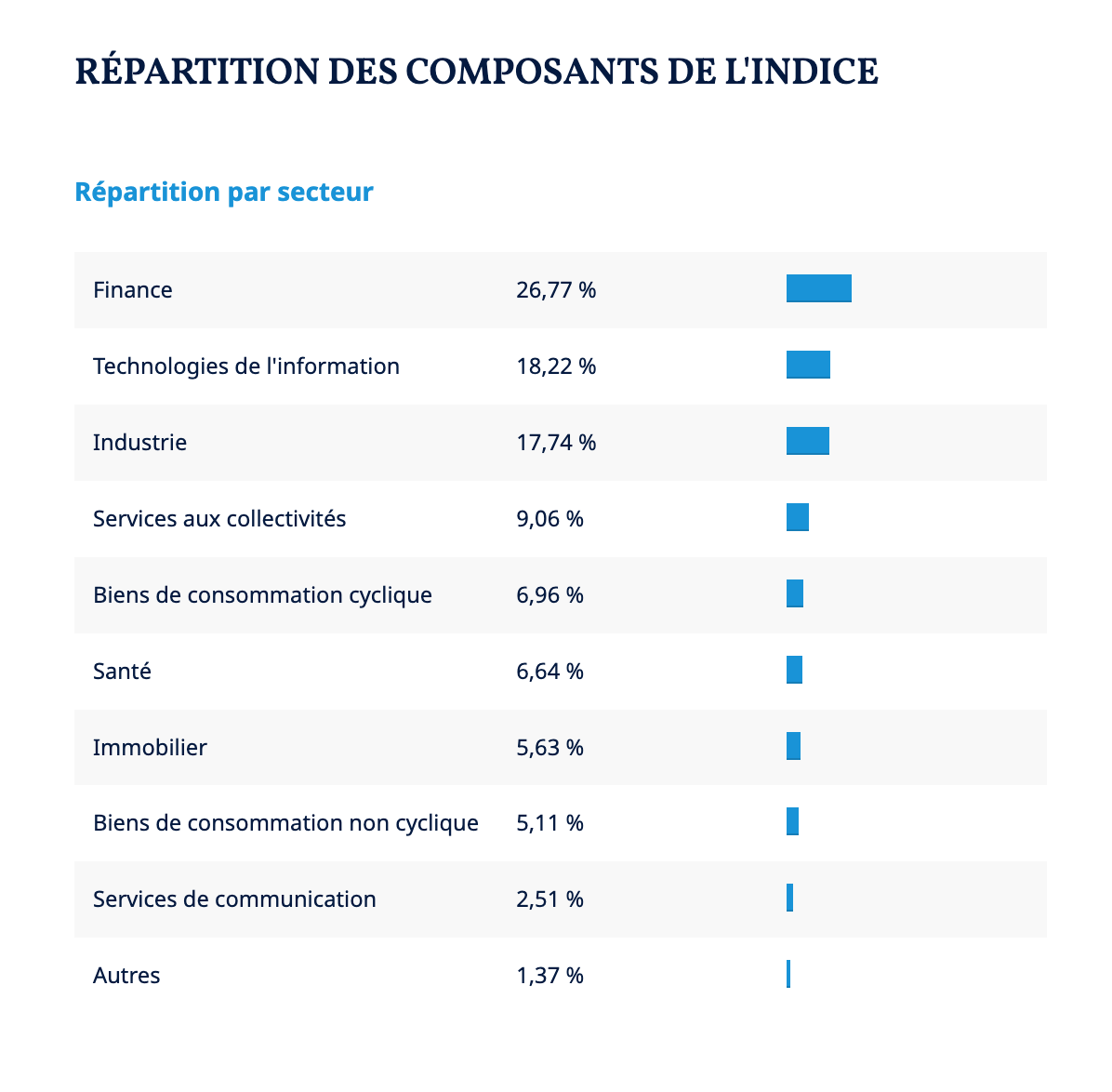
That said, this ETF trades geographic diversification for a European focus. Europe is proactive on climate regulation, but it accounts for only part of global innovation in the field. On top of that, the ETF's sector concentration in industry, finance and technology can increase volatility if those sectors are hit. Investors should be aware of this.
Amundi CAC 40 ESG UCITS ETF DR (C40)
The CAC 40 ESG is France's take on responsible investing. The fund picks leading French companies against strict ESG criteria while avoiding controversial sectors. It covers sectors such as luxury goods, industry and healthcare, with a strong domestic bias. The fund's ISIN is LU1681046931; its full profile is available on JustETF.
The fund appeals to those looking to combine an environmental commitment with support for the French economy. With a TER of 0.25%, it remains affordable for an ESG ETF. Physical replication also ensures a high level of transparency.
It does, however, carry a double concentration: by sector (industry, luxury goods) and by geography (almost entirely France).

Best climate ETFs that are not PEA-eligible
iShares Global Clean Energy Transition UCITS ETF (INRG)

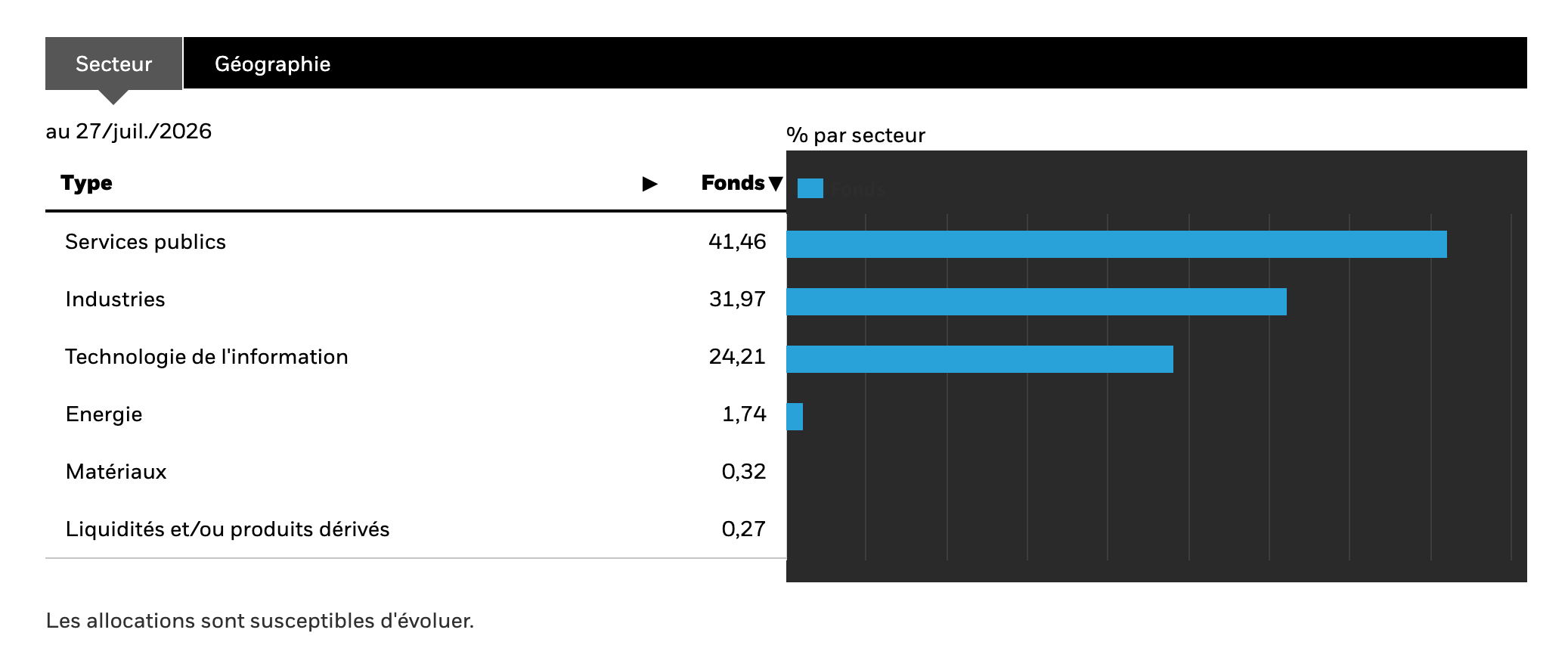
INRG is a bellwether for the listed clean energy sector. The fund, which tracks the S&P Global Clean Energy index, brings together companies worldwide active in renewable energy generation or technology. Its ISIN is IE00B1XNHC34 and it holds around €2.77 billion in assets; its full profile is available on JustETF. The fund splits its holdings between utilities (around 41%), industry (around 32%) and technology (around 24%), with clean energy producers and equipment makers. Its largest positions include Bloom Energy, First Solar, Enphase Energy and China Yangtze Power (holdings as at 28/07/2026, source JustETF).
The fund does more than ride the green trend. It applies ESG filters and excludes companies with high carbon emissions. Even so, INRG's volatility shows that the energy transition is complex, driven by investment cycles, public policy and technological competition.
Watch the 0.65% TER, which is above the average for broad ETFs and weighs on long-term performance.
INRG is also a good example of geographic diversification. Invested mainly in the United States, China, Brazil and Israel, it offers global coverage, but that is what makes it ineligible for the PEA, France's equity savings plan.

The chart above compares the iShares Global Clean Energy ETF with the S&P 500 index. The Clean Energy line shows a spectacular surge during the 2020-2021 "green boom", followed by an equally brutal fall, illustrating how volatile it is.
The S&P 500, by contrast, climbs steadily. That gap captures the difference between the stability of a diversified index and the cyclical nature of a thematic sector.
Amundi MSCI World Climate Paris Aligned UCITS ETF Acc (PABW)
PABW answers the demand for alignment with the Paris Agreement, but on a global scale. The fund imposes a 7% annual reduction along its decarbonisation path and a 50% cut in carbon intensity compared with the standard MSCI World index. It is one of the most rigorous ETFs in terms of climate methodology. Under Delegated Regulation (EU) 2020/1818, a Paris-Aligned Benchmark index must cut its carbon intensity by at least 50% against its investment universe and reduce it by 7% a year. The fund's ISIN is IE000CL68Z69, with a TER of 0.20%; its full profile is available on JustETF.
Despite the climate filters, large US technology stocks such as Apple, Microsoft and Nvidia dominate the fund. They have relatively low carbon intensity and carry significant weight in the global economy.

How do you invest in climate ETFs without getting it wrong?
Diversification and risk management
It is tempting to focus only on "clean" or "low carbon" investments. But the volatility of thematic ETFs, especially those built around renewable energy, shows that the ecological transition brings challenges. Market cycles, public policy and technological innovation can change the picture quickly.
A climate-focused portfolio benefits from keeping adequate diversification.
European climate ETFs, for instance, tend to be overweight industrial or financial sectors and often concentrate on one region.
Global synthetic ETFs, on the other hand, offer broader diversification but potentially looser climate alignment.
Counterparty risk also needs watching. Synthetically replicated ETFs rely on swaps with banks. UCITS regulation provides some protection, but zero risk does not exist. It is a risk to monitor closely.
Why research and analysis matter
Detail is everything in sustainable finance. An ETF labelled "climate" may not be aligned with the Paris Agreement, and an ESG label does not guarantee a low carbon footprint. Index methodologies vary considerably:
- some simply exclude coal,
- others require an annual cut in emissions,
- others rely solely on an overall ESG score.
Before investing, examine the fund's composition closely. Identify the main companies held, the share of "green" revenue and whether the companies are in transition or already exemplary. That is what separates a genuinely responsible investment from a coat of green paint.
Some French companies are required to publish their greenhouse gas emissions report ("bilan carbone"). That carbon impact is public and can be consulted on the ADEME website.

Fund size also matters. An ETF managing less than €100 million is more likely to close, which could force sales and unexpected costs. Choosing well-established funds is itself an investment in durability.
Choosing the best climate ETF for your investor profile
There is no universal "best" climate ETF, only options suited to different profiles and convictions. Depending on your priorities:
- A European PAB ETF with physical replication puts climate rigour first.
- A synthetic ETF on the MSCI World or the S&P 500 ESG offers broader global diversification.
Management fees (TER) affect net performance: over ten years, a fee gap reduces the final return.
Tax treatment is a factor to consider. Always check whether the ETF is PEA-eligible, to optimise the net performance of your investment. Apps such as Finary let you centralise the tracking of your ETFs and measure both the carbon footprint and the real fees of your portfolio, across every broker.
Which climate ETF should you start with?
There is no universal climate ETF: the right choice depends on your priority, maximum climate rigour, global diversification or PEA eligibility. Understanding the index methodology, questioning labels and diversifying remain the best habits.
Climate ETFs offer investors an opportunity. They can combine financial performance with an environmental commitment.

Frequently asked questions
What is the difference between a PAB ETF and a CTB ETF?
A PAB (Paris-Aligned Benchmark) ETF requires at least a 50% cut in carbon intensity against its investment universe and excludes fossil fuels. A CTB (Climate Transition Benchmark) ETF targets 30% and stays invested in sectors that are in transition. Both apply a 7% annual decarbonisation rate.
Is a climate ETF PEA-eligible?
Only ETFs made up of European equities are PEA-eligible, such as the Amundi MSCI EMU Climate PAB or the CAC 40 ESG. Global ETFs, such as the MSCI World Climate Paris Aligned, and thematic ones, such as the iShares Global Clean Energy, are excluded because they invest outside the eurozone.
Are climate ETFs riskier than conventional ETFs?
It depends on their composition. A broad climate ETF tracking the MSCI World carries a risk close to that of a global equity ETF. Thematic "clean energy" ETFs are far more volatile, because of their exposure to small caps and their sensitivity to interest rates.
How can you spot greenwashing in a climate ETF?
Look at the index methodology rather than the label alone. An "ESG" ETF does not guarantee a low carbon footprint. Check the portfolio's carbon intensity, the share of green revenue, whether fossil fuels are genuinely excluded and how transparent the issuer's reporting is.
What fees should you expect on a climate ETF?
The TER varies with the strategy: around 0.15% for a eurozone PAB ETF such as the Amundi PAB, 0.25% for a CAC 40 ESG, and up to 0.65% for a thematic clean energy ETF such as INRG. Over ten years, that fee gap noticeably reduces net performance.
Sources
JustETF: Amundi MSCI EMU Climate Paris Aligned UCITS ETF Acc (PABM), TER and holdings
JustETF: Amundi CAC 40 ESG UCITS ETF DR (C40), TER and holdings
JustETF: iShares Global Clean Energy Transition UCITS ETF (INRG), TER, sectors and holdings
JustETF: Amundi MSCI World Climate Paris Aligned UCITS ETF Acc (PABW), TER and holdings
Delegated Regulation (EU) 2020/1818: standards for PAB and CTB benchmark indices
ADEME: database of company greenhouse gas emissions reports
Regulatory disclaimers: Marketing communication. Investing carries a risk of partial or total capital loss. Past performance is not a reliable indicator of future performance. This article is provided for information and educational purposes only; it does not constitute personalised investment advice, a buy or sell recommendation, or tax advice. Before investing, read the Key Information Document (KID) and, where relevant, consult an authorised adviser. Finary SAS, an investment firm authorised by the ACPR (no. 19283), member of AMAFI. Insurance broker registered with ORIAS (no. 21001279), member of the CNCGP (association approved by the AMF). Crypto-Asset Service Provider (CASP, "PSCA" in French) authorised by the AMF under the MiCA regime, references no. A2026-026 and no. N2026-008.