How to Invest in Crypto: A Complete Beginner's Guide


Updated on 15 July 2026
To start investing in crypto, open an account with a platform authorised as a Crypto-Asset Service Provider (CASP, "PSCA" in French) under MiCA (Finary, Coinbase, Bitpanda), secure your holdings on a hardware wallet, and spread your Bitcoin and Ethereum purchases over time with DCA. This guide covers every step, the diversification strategies and the 2026 tax rules.

- Open an account with a platform authorised as a Crypto-Asset Service Provider (CASP, "PSCA" in French) under the EU MiCA regulation (Markets in Crypto-Assets), such as Finary, Coinbase, Bitpanda or Kraken.
- Start with Bitcoin and Ethereum before diversifying, and spread your purchases over time with DCA (Dollar-Cost Averaging).
- Move your holdings onto a hardware wallet once you have invested a few hundred euros, to keep your private keys offline.
- In France, capital gains on disposals are taxed at a flat rate of 31.4% since 1 January 2026.
- Only invest what you can afford to lose: crypto remains a highly volatile asset, with no capital guarantee.
Why invest in cryptocurrencies?
The benefits of investing in crypto
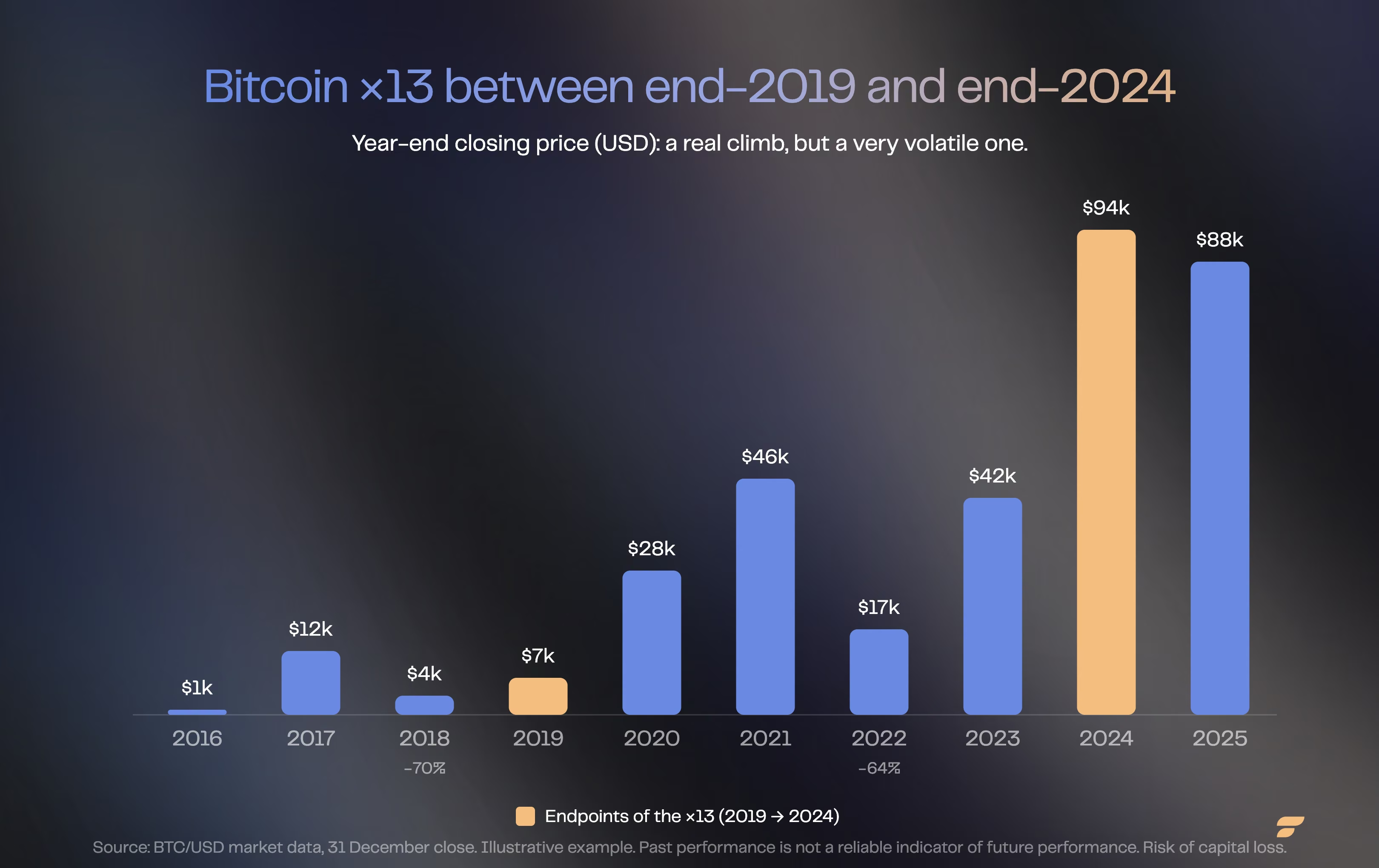
Investing in cryptocurrencies can offer prospects of gains but carries a high risk of capital loss, higher than traditional investments. With high volatility, significant gains and significant losses are both possible in a short time. Bitcoin, for example, went from around €7,000 in early 2020 to a peak close to €94,000 at the end of 2024, before falling back to around €88,000 at the end of 2025 and then to around €56,000 to €57,000 by mid-2026, a fall of about 40% from its peak.
Another key advantage is the accessibility of the crypto market, open 24/7. You can buy or sell your digital assets at any time, unlike traditional stock markets, which only trade during restricted hours.
Finally, allocating a small part of your portfolio to cryptocurrencies diversifies it and can add growth potential.
The risks to consider
However, investing in cryptocurrencies also carries significant risks. High volatility is a double-edged sword: it makes rapid gains possible, but it also brings a risk of sudden losses.
Moreover, the crypto market remains lightly regulated compared with traditional financial markets. Investors do not enjoy the same protections, and grey areas remain over the reliability and security of some players and exchanges.
Finally, the security of your digital assets must be a constant concern. Hacks and scams are frequent.
How to choose the right platform to invest
Regulation comes first: choose a platform authorised as a PSCA/CASP under MiCA, then compare the fees, the range of available cryptos and the features (staking, wealth aggregation) against your own profile.
Comparing the popular platforms
To buy cryptocurrencies, choosing the exchange that fits your needs is a key success factor. The most popular players in France include:
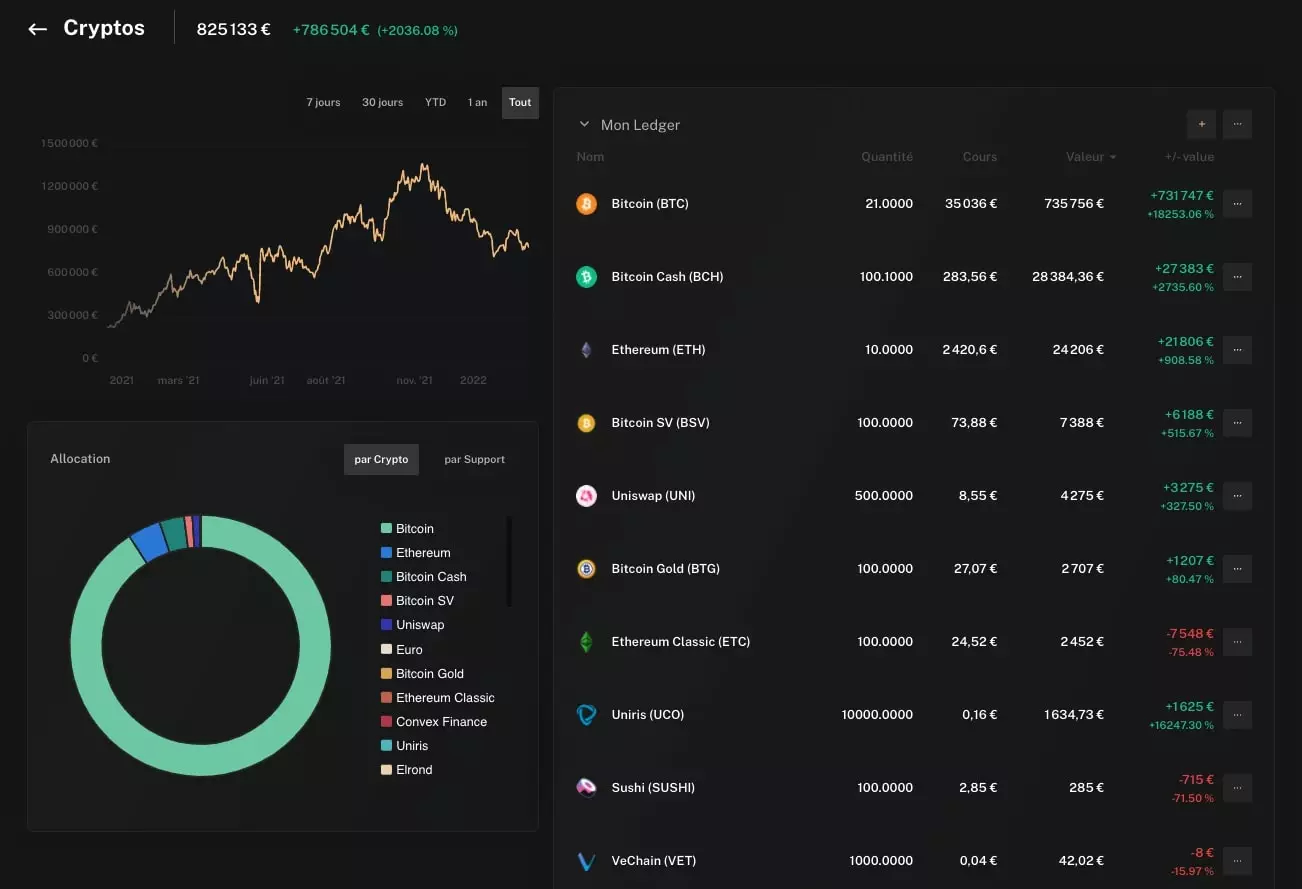
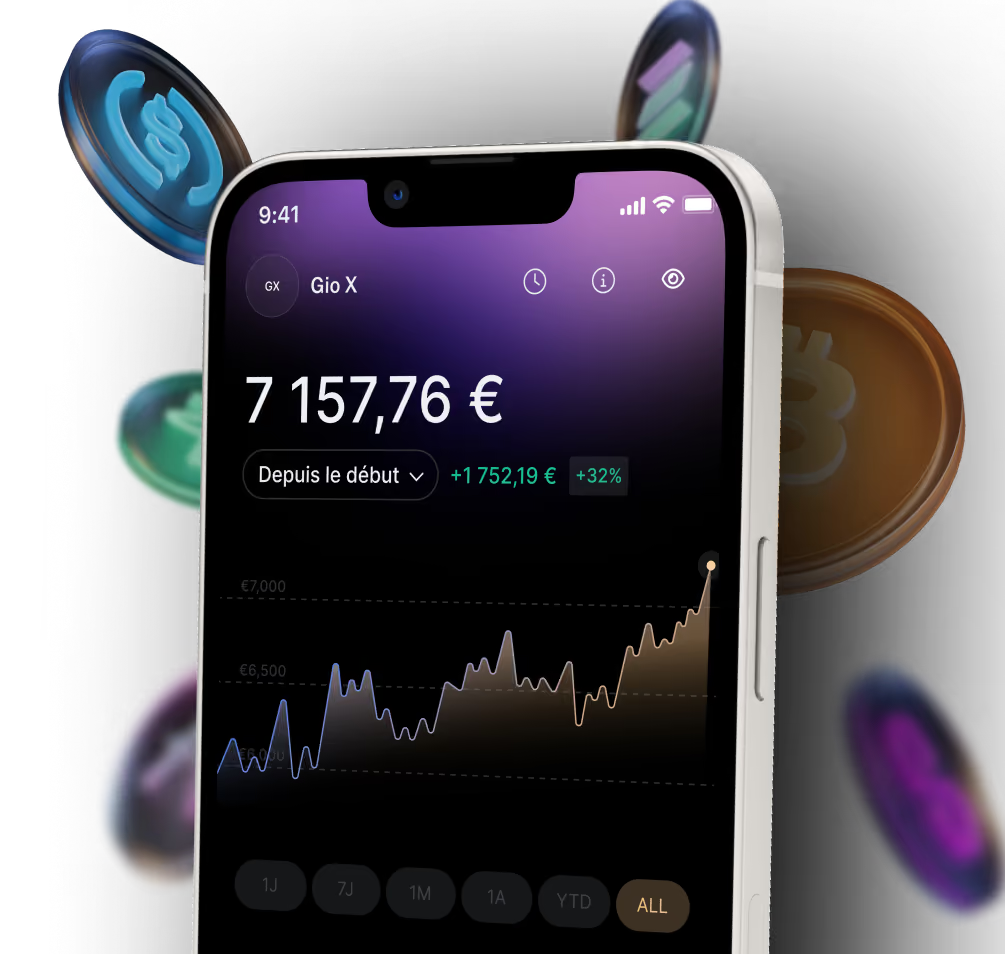
- Finary: a French platform authorised as a Crypto-Asset Service Provider (CASP, "PSCA" in French) under the EU MiCA regulation, which lets you both invest directly in more than 25 cryptocurrencies and aggregate all your accounts (including your other exchanges) for a global view of your wealth. Its user-friendly mobile app and its analysis features make it a practical option, especially if you hold other investments alongside crypto.
- Kraken: one of the largest international exchanges, authorised under PSCA/MiCA, offering a wide selection of cryptos and advanced features (staking, derivatives). Its fees are competitive. The interface can be intimidating for a beginner, however.
- eToro: a broker covering multiple asset classes, including cryptocurrencies. Its social trading feature is useful for watching and automatically copying the best-performing investors. Fees are higher, however.
- Bitpanda: a well-established Austrian platform with a simple, intuitive interface. It gives easy access to more than 50 cryptos, but also to precious metals and ETFs.
- Revolut: a financial "super app" offering banking services alongside investments in equities and a selection of around thirty cryptos. Convenient to start with, but with more limited features than a dedicated exchange.
Selection criteria
To pick the platform that suits you, pay attention to its fees: they can quickly eat into your returns, especially if you trade frequently. Check the buying and selling fees, but also the withdrawal and deposit fees.
The platform's security and financial soundness are crucial. Since 1 July 2026, only providers authorised as a PSCA (Prestataire de Services sur Crypto-Actifs, a MiCA Crypto-Asset Service Provider) may legally offer their services in France: favour these regulated players.
These platforms must meet strict standards on security and investor protection.
Also think about the specific features you may need, such as staking (locking up your cryptos to earn rewards) or lending (lending out cryptos). Not every exchange offers the same services.
To go further, see our comparison of the best platforms for buying cryptocurrencies: fees, features and level of regulation for each provider.
finally regulated
Investing carries risks, including the risk of capital loss. Crypto-assets are highly volatile: you may lose all or part of your investment. Past performance is not a reliable indicator of future performance. Finary is authorised by the AMF as a crypto-asset service provider (PSCA) under the MiCA regime.
Understanding the main cryptocurrencies
Bitcoin
The best-known crypto is Bitcoin (BTC), also the largest by market capitalisation. Described in a white paper published in 2008 by the mysterious Satoshi Nakamoto before the network launched in early 2009, it is sometimes presented as "digital gold" by some players, a description that is debated and not recognised by regulators.
Its programmed scarcity plays a key role in its valuation. That limited supply, combined with rising demand, mechanically supports the price over the long term.
Bitcoin is capped at 21 million units, an argument put forward by its supporters, but its high volatility means it cannot be described as a safe-haven asset in the regulatory sense.
While Bitcoin does not offer the same use cases as more recent blockchains, it remains essential. As the benchmark digital asset, it is a key gateway into the crypto world.
Ethereum
Ethereum (ETH) is the second-largest crypto by market capitalisation. But unlike Bitcoin, Ethereum's main purpose is not to be a currency. It is above all a decentralised platform for creating smart contracts and decentralised applications (dApps).
This opens up a vast field: decentralised finance (DeFi), non-fungible tokens (NFTs), decentralised governance (DAOs) and much more. Most of these fast-growing sectors run on the Ethereum blockchain.
This versatility, reinforced by the move to proof of stake (The Merge, completed in 2022) which sharply cut its energy consumption, makes Ethereum a major asset with significant growth potential. The price of ether rose sharply in 2021, followed by steep falls. Past performance is not a reliable indicator of future performance.
Other popular cryptos
Beyond the leading Bitcoin-Ethereum pair, the cryptocurrency ecosystem keeps adding innovative projects. Examples include:
- Solana (SOL): a high-performance, low-cost blockchain, popular for DeFi and NFT development. It positions itself as a serious competitor to Ethereum.
- Polkadot (DOT): a protocol designed to let different blockchains communicate with each other to build a decentralised internet. It allows "parachains" dedicated to specific use cases.
- Chainlink (LINK): a project connecting blockchains to the real world through "oracles", meaning verified and secured data feeds. This opens up many possibilities for smart contracts.
New crypto projects appear constantly. They aim to solve specific problems or to explore new use cases for blockchain technology.
Adding some of them to your portfolio can be worthwhile for diversification. But study each project carefully and watch out for the traps.
Investment strategies for beginners
DCA (Dollar-Cost Averaging)
The DCA (Dollar-Cost Averaging) strategy is often recommended to beginners. It means investing a fixed amount at regular intervals (for example €200 every month), whatever the market is doing.
The point? Smoothing your average purchase price over time, and so reducing the impact of volatility. With this method, you mechanically buy more crypto when prices are low and less when they are high.
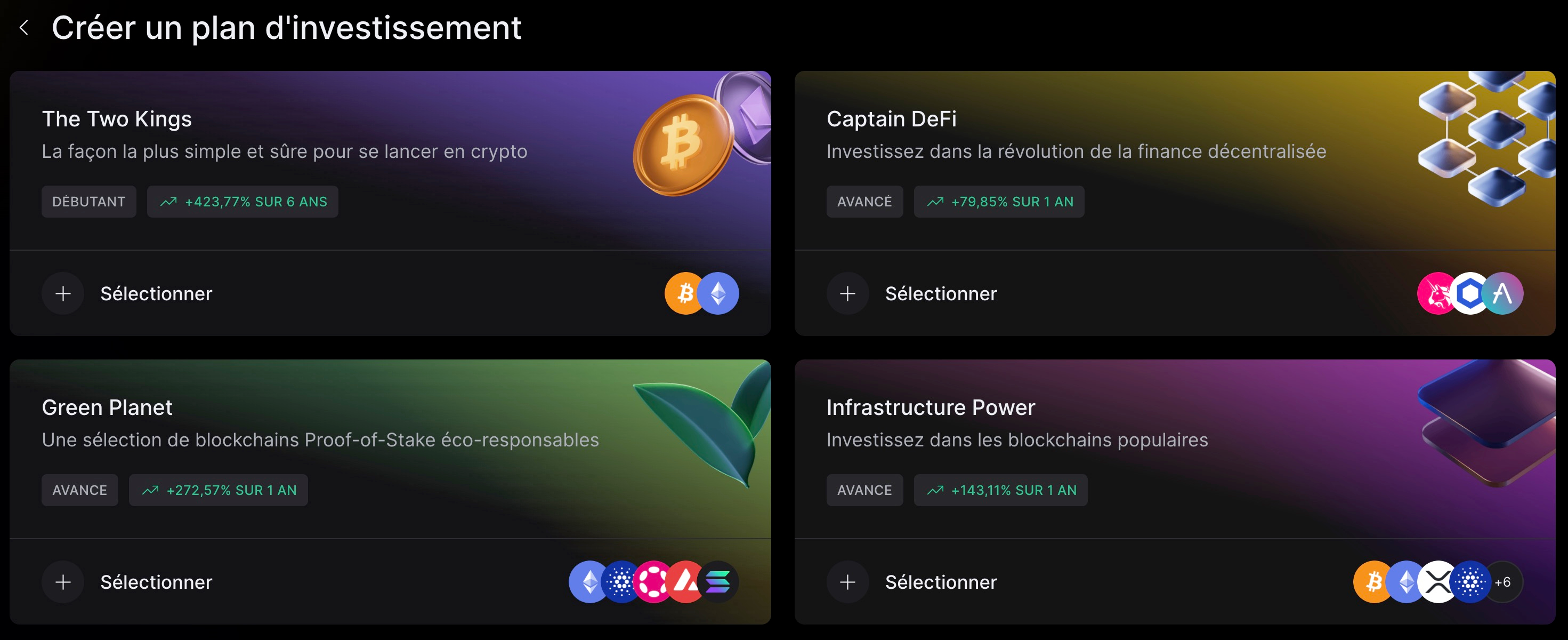
At Finary, we have built an automatic DCA feature. You can choose from 4 preset templates.
Over the long term, DCA is less emotionally stressful than trying to time the market by buying the dips and selling the peaks.
Portfolio diversification
"Do not put all your eggs in one basket": this old stock market adage applies to crypto too. The golden rule is never to invest more than you can afford to lose.
The allocation to crypto-assets depends on each investor's profile, horizon and risk tolerance. Any decision should be taken after consulting a professional. The weighting will depend on your risk appetite.
Within your crypto portfolio itself, spread your investments across different projects. For purely educational purposes, some investors split their holdings between BTC, ETH and altcoins. That split does not constitute personalised advice.
Remember to rebalance your portfolio regularly. With crypto's high volatility, one asset can quickly come to dominate. To avoid overexposure to risk, consider taking profits by selling part of the assets that have risen a lot, to return to your target allocation.
Avoiding hype cycles
The crypto market is regularly subject to hype and euphoria around certain projects (remember the buzz around Dogecoin). These dynamics can look attractive, but be extremely careful before committing, and keep a cool head.
To spot solid projects, nothing beats a good dose of your own research. Look at these key points:
- The project team: who are the founders? What is their experience and track record? Avoid completely anonymous teams.
- The white paper: this document sets out the project's technology and value proposition. Watch for the clarity and the credibility of the arguments put forward.
- The use cases: does the project answer a real problem? Does it have a market and potential users? Beware of "solution looking for a problem" projects.
- Transparency: does the team communicate regularly and honestly about the project's progress? Good projects have nothing to hide.
If some aspects look doubtful or unclear, it is better to abstain. Missing an opportunity beats risking your capital on an unreliable project.
Tips for investing in altcoins
An altcoin is any cryptocurrency other than Bitcoin. The market counts several thousand crypto-assets, most of which carry a high risk of total loss. To invest in altcoins responsibly, keep a few principles in mind:
- Stick to the top 100 cryptos by market capitalisation to begin with. They offer the best signs of credibility and liquidity.
- Set a maximum exposure limit for the riskiest altcoins (for example 5% of the portfolio), to limit the damage in a crash.
- Always ask about long-term viability: does the project bring something innovative? Technological excellence is not enough, it also needs a viable business model.
- Learn to spot the red flags: aggressive advertising, promises of unrealistic returns, pressure to "buy before it is too late".
Remember, patience is a virtue in this market. Take the time to learn before you start. And accept that no investor, however experienced, wins every time.
at your own pace

Investing carries risks, including the risk of capital loss. Crypto-assets are highly volatile: you may lose all or part of your investment. Past performance is not a reliable indicator of future performance. Finary is authorised by the AMF as a crypto-asset service provider (PSCA) under the MiCA regime.
How to secure your crypto investments
Securing a crypto portfolio starts with storing your private keys offline, on a hardware wallet, as soon as your holdings exceed a few hundred euros. So you have invested in cryptocurrencies: well done. But have you thought about the security of those digital assets?
Unlike money in a bank account, cryptos are not guaranteed by a trusted third party such as a state. As the owner, you alone are responsible for protecting them.
It is strongly recommended to use a hardware wallet to store your cryptos above a certain amount. It is a physical device, often the size of a USB stick, that keeps your private keys (the equivalent of a password granting access to your assets) offline.
A hardware wallet does not store your cryptocurrencies directly. It only holds the private keys that give access to them.

The most popular hardware wallets are the Ledger Nano S and the Trezor. Their main advantages:
- Maximum security: your private keys are never exposed to the internet, which drastically reduces the risk of hacking.
- Physical transaction approval: to transfer crypto you must plug in your wallet and confirm manually. A hacker cannot empty your account remotely.
- Resistance to viruses and malware: a hardware wallet is immune to most of the computer threats that can infect a computer or a smartphone.
Expect to pay around €50 to €100 for a quality hardware wallet. Money well spent given the sums at stake and the peace of mind it buys.
Putting your crypto to work
Staking
Crypto staking is an excellent way to generate passive income from your cryptocurrencies. It involves helping to secure and run a "proof of stake" blockchain (such as Ethereum since The Merge, Solana or Cardano) by locking up some of your tokens.
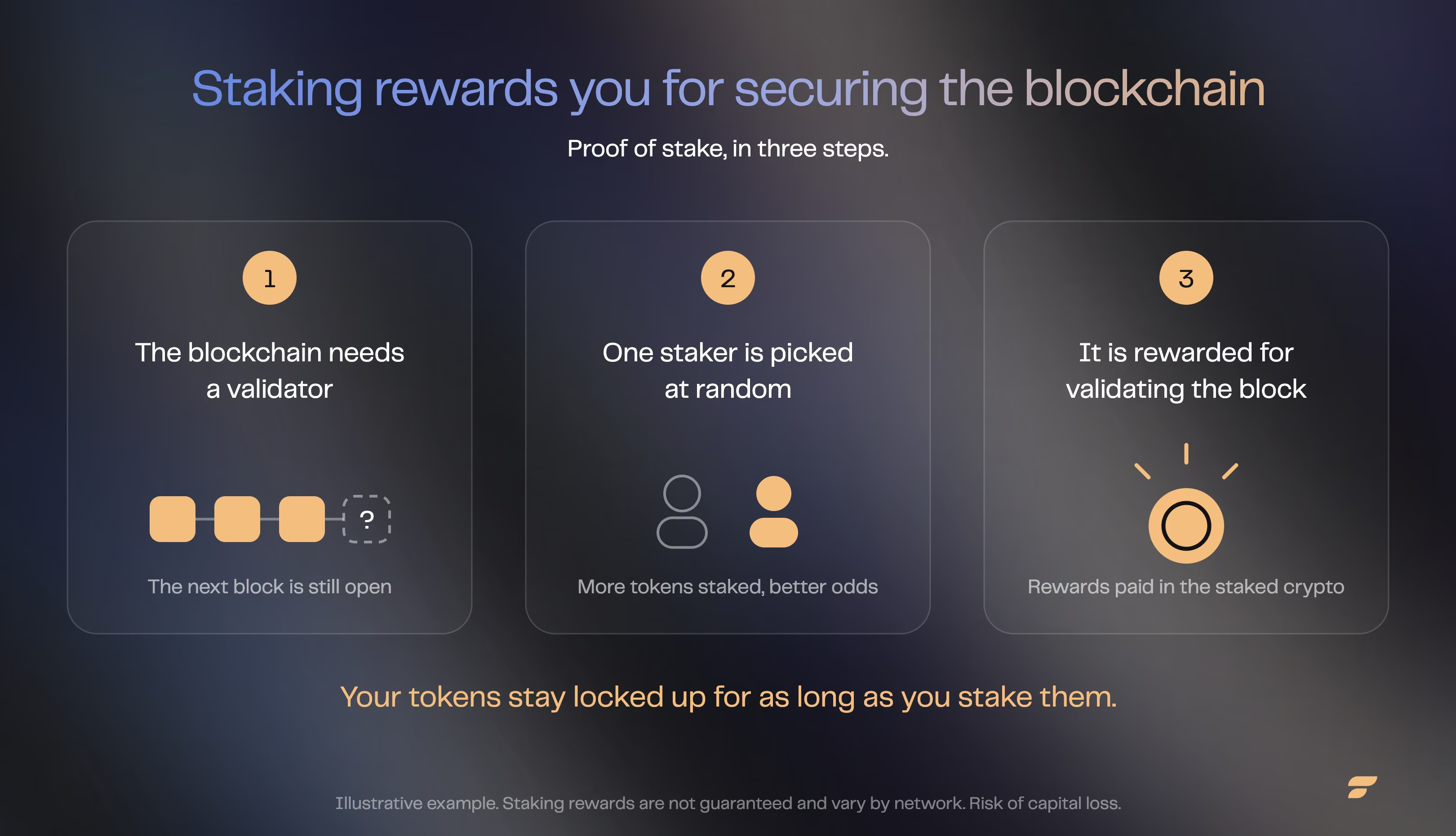
In return, you receive rewards in crypto, a little like interest.
In practice, staking means "delegating" your crypto to a validator, which uses it to validate blocks of transactions. The more tokens you stake, the better your chances of being selected to add the next block and collect the associated rewards.
Staking yields vary by crypto and by platform: around 3% to 4% a year for Ethereum, against 6% to 8% for Solana or 2% to 4% for Cardano. Lesser-known cryptocurrencies can show higher yields, but often at the cost of higher risk.
To take part in staking you generally need a minimum number of tokens (for example 32 ETH to become a validator on Ethereum) and to lock them up for a set period.
Staking carries risks, including volatility and penalties. But it remains an attractive option for growing crypto capital over the long term.
Lending
Another way to put your crypto to work: lending, or lending out cryptocurrencies. The principle is similar to traditional bank lending, except that here you lend your digital assets to other users through decentralised finance (DeFi) protocols.
Lending platforms such as Aave or Compound work with liquidity pools: lenders deposit their assets into these shared reserves, which borrowers can draw on in exchange for interest. Interest rates, generally higher than those of conventional banks, vary with supply and demand for each crypto.
By lending out idle crypto you can generate a potential yield, exposed to risks (smart contract failure, hacking, total loss). Earnings are paid in the crypto lent out or in the platform's native token. Some protocols even allow stablecoins to be lent out.
Whether you opt for staking, lending or more exotic strategies, remember that a potential return is always compensation for a potential risk.
How is cryptocurrency taxed in France?
Taxation of cryptocurrency gains
Have you made gains selling your bitcoins or ethers? Congratulations, but do not forget to declare those gains to the tax authorities. According to the French tax administration, the flat-rate levy on capital gains from disposals of digital assets stands at 31.4% since 1 January 2026, whatever the number of transactions. Since 2019, income from cryptocurrencies has been taxable in France.
Individual capital gains on crypto-assets fall under the specific regime of article 150 VH bis of the CGI (Code général des impôts, the French tax code). This rule applies as soon as you convert your cryptocurrencies into euros as a personal investment.
They are subject to the "flat tax", a flat-rate levy (PFU) of 31.4% since 1 January 2026. It comprises 12.8% income tax and 18.6% social contributions (art. 150 VH bis CGI regime).
In practice, if you sell 1 Bitcoin for €50,000 that you bought for €10,000, your taxable gain is €40,000. On that amount you will owe €12,560 in tax (31.4% flat tax). This flat rate applies whatever your overall income and holding period.
Note that only converting crypto into euros or another legal currency (dollars, yen) is taxable. Crypto-to-crypto swaps (for example BTC for ETH) are not treated as taxable disposals, as long as there is no conversion into traditional currency.
Tips for optimising your tax bill
Crypto taxation can quickly become complex, especially if you trade actively. Here are a few tips to see it more clearly and optimise your tax:
- Use euro-backed stablecoins (such as Circle's MiCA-compliant EURC) rather than dollar-backed ones to step out of the market temporarily without triggering tax. Watch the counterparty risk, though.
- Use tax calculation software, which syncs your transactions from the exchanges and generates your return automatically.
- Offset your gains with your losses. If you have made losses on some cryptos, you can deduct them from the gains made on others. You can even carry excess losses forward to later years.
Crypto has to be earned: learn before you invest
You now have the fundamentals for investing in cryptocurrencies as a beginner: choose a regulated platform, secure your assets, spread your purchases with DCA and plan for tax.
One article cannot be exhaustive on a subject this vast and fast-moving. The crypto world evolves at speed, with its share of innovations but also of scams and risks to avoid. Keeping informed continuously, following the news and the analysis of recognised specialists, is essential.
One thing is certain: cryptocurrencies are no longer a side show. With a significant global market capitalisation (CoinMarketCap data, variable), they have become an asset class in their own right, one that is becoming institutionalised and attracting more and more investors.
By taking an interest now and learning to navigate this market, you position yourself for what looks set to be one of the biggest technological and financial revolutions of our time. Before investing, assess your risk tolerance and consult a professional.
with confidence
Investing carries risks, including the risk of capital loss. Crypto-assets are highly volatile: you may lose all or part of your investment. Past performance is not a reliable indicator of future performance. Finary is authorised by the AMF as a crypto-asset service provider (PSCA) under the MiCA regime.
Frequently asked questions
How can I start with 100 euros?
Want to invest in crypto on a small budget? No need to panic: starting with €100 is perfectly possible. What matters is getting familiar with the market and building good habits.
To begin, favour reputable platforms authorised under PSCA/MiCA, such as Coinbase or Bitpanda. Create your account, verify your identity, then deposit your €100 by card or bank transfer. Focus first on the most established cryptos, such as Bitcoin and Ethereum. You can start by buying €50 of each.
Then set yourself a regular investment target, for example €50 a month. This DCA (Dollar Cost Averaging) strategy will smooth your average purchase price. To make it easier, set up a recurring buy order. Most platforms offer this feature.
And above all, learn. On a small budget, your priority is not making quick gains but learning. Follow crypto news, look into how blockchain works, absorb the culture of the ecosystem. That is what will let you spot the good opportunities later.
Direct investment or crypto ETF?
Crypto ETFs (such as Bitcoin ETFs) are funds that track the price of one or more cryptocurrencies and trade on traditional markets like shares.
Investing directly has several advantages. You have full control of your assets, which you can transfer and use as you see fit. That lets you take part in the crypto ecosystem (DeFi, NFTs, staking) and benefit from all the opportunities the technology offers.
On the other hand, buying and managing crypto yourself requires a minimum of technical knowledge. You have to choose a reliable platform, secure your storage and follow the market. That can quickly become time-consuming and stressful, especially for a newcomer.
Which is the best crypto to start with?
For a beginner, Bitcoin and Ethereum are the most prudent choices: they are the two largest market capitalisations, the most liquid and the best documented. They remain volatile, but they avoid the higher risk of total loss carried by small altcoins. Diversify only once you understand these basics.
What is the minimum to invest in crypto?
There is no regulatory minimum: you can start with a few tens of euros, since cryptos are divisible. What matters is not the amount but the share of your wealth: most specialists recommend limiting crypto exposure to a small fraction you can afford to lose.
How do you declare crypto to the French tax authorities?
You must declare digital-asset accounts held abroad (form 3916-bis) and your capital gains on disposals (form 2086). Only conversions into euros or legal tender are taxable, at a rate of 31.4% in 2026. Specialised tax software automates the calculation.
Sources
impots.gouv.fr, taxation of digital-asset disposals (PFU flat tax of 31.4%)
service-public.gouv.fr, change to the flat-rate levy (PFU) on 1 January 2026
AMF, white list of authorised crypto-asset service providers (PSCA)
Ethereum EIPs, 32 ETH minimum threshold for a solo validator
Regulatory disclaimers: Marketing communication. Investing carries a risk of partial or total capital loss. Past performance is not a reliable indicator of future performance. This article is provided for information and educational purposes only; it does not constitute personalised investment advice, a buy or sell recommendation, or tax advice. Crypto-assets are highly volatile and carry a risk of total capital loss. They benefit from no capital guarantee and from no deposit guarantee or investor compensation scheme. Before investing, read the Key Information Document (KID) and, where relevant, consult an authorised adviser. Finary SAS, an Investment Firm authorised by the ACPR under no. 19283, member of AMAFI. Insurance broker registered with ORIAS under no. 21001279, member of the CNCGP (association approved by the AMF). Crypto-Asset Service Provider (PSCA) authorised by the AMF under the MiCA regime, references no. A2026-026 and no. N2026-008.